
The Ultimate Guide to Tesla Warranty Coverage – Model S, 3, X, Y & Cybertruck
Quick disclaimer: We are not Tesla, and official Tesla warranty terms can change. The coverage that applies to your specific vehicle depends on the warranty documents tied to that VIN, delivery date, region, title status, service history, and ownership path. This guide is meant to help you understand the general landscape, not replace Tesla’s official warranty documents or tell you what coverage you personally have. Before buying, selling, filing a claim, or making a repair decision, check your Tesla app, your actual warranty paperwork, and Tesla directly.
As anyone who’s looked into Tesla’s warranty specifics knows, there’s plenty of ground to cover. We’re here to help break it down for you!
What does Tesla’s warranty cover? Does a used Tesla warranty transfer to a new owner? What is included on the Tesla battery warranty? And the question that’s on every pre-owned Tesla buyer’s mind: can you buy an extended warranty on a used Tesla? (hint: the answer is sometimes, so read on!)
In this Ultimate Guide, we’ll be exploring the Tesla warranty terms model by model, including Cybertruck, new vs used Tesla warranty situations, and what the Tesla warranty doesn’t cover.
For the following sections, we’ll break down Tesla’s new vehicle warranties on a model-specific level. Afterwards, we’ll explore Tesla’s battery warranty terms, specifics on Tesla’s extended warranty, whether Tesla tires have a warranty, and ways that you can void a Tesla warranty in the following sections.
If you are just looking for quick answers to Frequently Asked Questions about what’s included in a Tesla warranty, feel free to skip ahead to that section!
Tesla Model S Warranty Explained
2026 note: Tesla has discontinued the Model S, but this section still matters for remaining new inventory, late-production cars, and used Model S buyers. Warranty coverage is tied to the vehicle and its original warranty terms, not whether Tesla is still taking normal new Model S orders.
The current warranty for a new Model S is called the New Vehicle Limited Warranty, which is a package of three warranty areas: the Basic Vehicle Limited Warranty, the Supplemental Restraint System Limited Warranty, and the Battery and Drive Unit Limited Warranty.
The Model S Basic Vehicle Limited Warranty is coverage for workmanship or materials defects on anything that Tesla itself manufactures or supplies. They specify “under normal use,” which pretty much means that if parts or materials fail during post-apocalyptic off-roading or an attempt to tow a tank behind your Model S, it’s not Tesla’s fault that the air spring dies or the differential cracks. Tesla’s Basic Vehicle Limited Warranty covers the cost of materials and repair (parts and labor) on defects for 4 years / 50,000 miles and is subject to whichever of those numbers comes first.
Tesla’s Supplemental Restraint System Limited Warranty covers original airbag and seatbelt systems on the Model S installed or made by Tesla. Cost of replacement or repair on these systems is covered under the warranty for up to 5 years / 60,000 miles (again, whichever happens first).
The Tesla Model S Battery and Drive Unit Warranty covers a very generous 8 years or 150,000 miles. We’ll go into more depth on specifics for this warranty in its own section (important on the Model S, because the warranty terms for some pre-2020 models vary), but the terms here are pretty generous.
The balance of the warranty transfers owner-to-owner, so if you buy a used Tesla within the years or mileage allotted to the original warranty period, you’ll still have coverage (with exceptions: see the salvage and warranty voiding sections for further info). Warranty transferability is great news for a used Model S; a number of small but potentially irritating manufacturing issues have cropped up over the years. Some of these issues include broken door handles, condensation inside the taillights, yellowing of the touchscreen control panel, and suspension problems.
How does Tesla’s Model S warranty compare to other manufacturers’ warranties? Honestly, Tesla’s warranty is pretty generous. Most mainstream EVs still offer roughly 3 years / 36,000 miles or 4 years / 50,000 miles of basic coverage and an 8-year battery warranty, though mileage limits vary. The Model S battery and drive unit coverage remains one of the stronger examples at 8 years / 150,000 miles.
Tesla Model 3 Warranty 101
Tesla’s Model 3 comes with their New Vehicle Limited Warranty on the day of delivery or from the first day the Model 3 is put into service (such as a loaner during repairs or a company vehicle). The New Vehicle Limited Warranty comes with Tesla’s Basic Vehicle Limited Warranty, their Safety Restraint System Limited Warranty, and their Battery and Drive Unit Warranty (head’s up: the Battery and Drive Unit Limited Warranty has some variable terms depending on the Model 3 trim level).
Basic Vehicle Limited Warranty for the Model 3 is essentially bumper to bumper coverage for 4 years or 50,000 miles. The warranty covers manufacturing defects, like cosmetic issues on delivery and materials failure under normal driving conditions. It does not cover things like collisions or normal wear and tear (think tires, seat covers, and windshield wiper blades).
The Model 3’s Safety Restraint System Limited Warranty is good for 5 years or 60,000 miles, and it covers the airbag and seatbelt systems originally manufactured or installed (provided) by Tesla.
Tesla’s Battery and Drive Unit Warranty is good for 8 years / 100,000 miles (whichever number the vehicle reaches first) on the Model 3 Standard Range (and, basically, the RWD Model 3) or 8 years / 120,000 miles for the Model 3 Long Range and the Model 3 Performance. We’ll get to the specifics of the battery warranty in a later section, but it basically covers manufacturing defects and damage from a battery fire (with exceptions).
The Model 3’s New Vehicle Limited Warranty is transferable to each owner for the balance of the warranty period (there are coverage exceptions: see the salvage and warranty voiding sections for further info). Obviously, buyers of a used Model 3 should remain aware of warranty conditions, but not many serious warranty issues past 2017 seem to plague the Model 3. The most common issues for the Model 3 involve paint chipping, misaligned panels, condensation in headlights and taillights, and heat pump failure (which makes for some serious discomfort in extreme climates).
Is the Model 3’s warranty a good one? We think so. For instance, the Model 3’s Basic Vehicle Limited Warranty lasts longer than the basic warranty on the Nissan Leaf, which has a 3 year/36,000 mile duration. As for the battery warranty, Nissan seems to be admitting that Tesla’s standard is better, and the 2022 Leaf matches Tesla’s battery warranty for time and mileage. So much to say, the Model 3 has had such a good warranty that other manufacturers have had to up their own warranty games.
Tesla Model X Warranty – All the Facts
2026 note: Tesla has discontinued the Model X alongside the Model S, but existing Model X warranty coverage still applies according to the vehicle’s warranty terms. For used buyers, the Model X warranty section remains especially relevant because out-of-warranty repairs on falcon-wing doors, suspension, and related systems can get expensive.
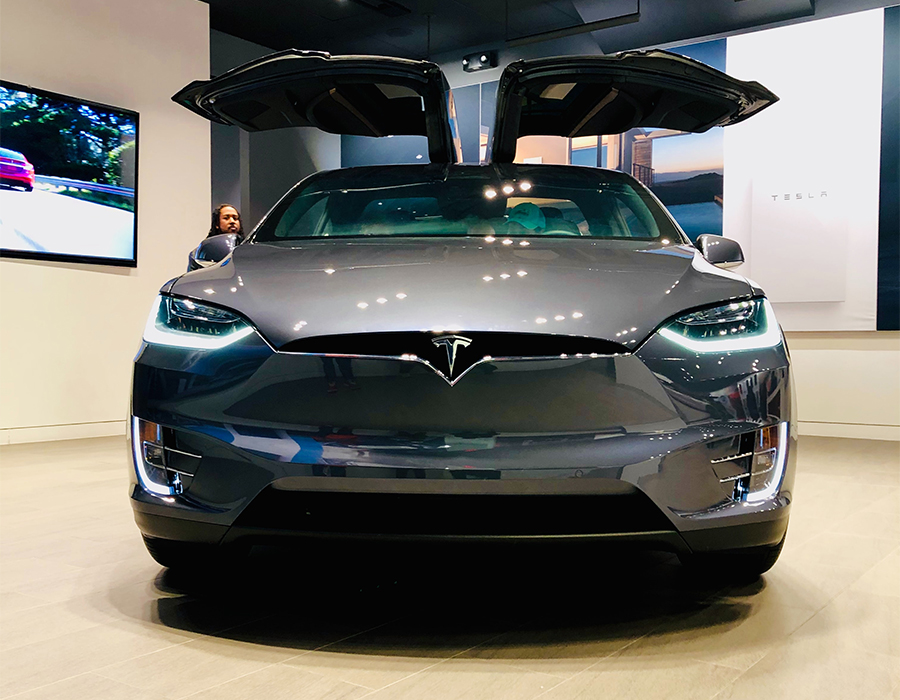 Tesla’s iconic falcon-wing Model X comes with their New Vehicle Limited Warranty. This warranty includes Tesla’s Basic Vehicle Limited Warranty, their Safety Restraint System Limited Warranty, and their Battery and Drive Unit Limited Warranty.
The Basic Vehicle Limited Warranty on the Model X is essentially bumper to bumper coverage on Tesla manufactured and provided parts, excluding wear and tear items such as windshield wiper blades, brake pads, and the like. This warranty period on the Model X is for 4 years or 50,000 miles. For the Model X, it’s important to pay attention to this warranty period and its conditions; some long-standing reliability issues with the falcon-wing doors can lead to some unpleasant repair or replacement costs down the road. For this reason, buyers looking for a used Model X should strongly consider getting an extended warranty if the vehicle qualifies (more on that in the Extended Warranty section down below).
The Safety Restraint System (SRS) Limited Warranty covers all parts of the Model X’s airbag and seatbelt systems that are made or supplied by Tesla, and the coverage lasts for 5 years or 60,000 miles.
Tesla’s Battery and Drive Unit Limited Warranty for the Model X covers the battery and drivetrain systems for 8 years and 150,000 miles, whichever the vehicle reaches first. This warranty covers manufacturing defects and a minimum battery capacity of 70% retention over the warranty’s time frame, and it also concerns damage as a result of a battery fire. We’ll get more into the specifics of this warranty in the Battery Warranty section down below (important on the Model X, because the warranty terms for some pre-2020 models vary).
Some common possible warranty issues for the Model X include MCU issues, drive shaft failure, and leaking rear door seals. And it’s always a good idea to keep an eye on the function of those Falcon Wing Doors.
How does the warranty on the Model X compare to other EVs? Pretty favorably. While some luxury competitors offer longer basic warranty terms, the Model X’s Battery and Drive Unit Limited Warranty shows Tesla’s confidence in their tech with a generous 8 year / 150,000 miles. That’s still strong coverage for a large luxury EV.
Tesla Model Y Warranty – Everything You Need to Know
Tesla’s Model Y falls under the New Vehicle Limited Warranty umbrella of warranty subsections that include a Basic Vehicle Limited Warranty, a Safety Restraint System Limited Warranty, and a Battery and Drive Unit Limited Warranty.
The Model Y’s Basic Vehicle Limited Warranty covers parts manufactured or provided by Tesla for 4 years or 50,000 miles. This includes things like body panels, the touch screen control panel, side mirrors, and so on. It does not include wear and tear items like wiper blades and seating material.
The Model Y’s Safety Restraint System Limited Warranty covers seat belt and air bag systems for up to 5 years or 60,000 miles. Repair and replacement costs for defective materials or workmanship are covered so long as they fall within the guidelines provided by Tesla’s warranty documentation (we’ll cover a few ways you can void your warranty in a later section).
The Battery and Drive Unit Limited Warranty for the Model Y covers those systems for 8 years or 120,000 miles in the Long Range and Performance trims. This warranty covers damage due to battery fires or unacceptably low battery capacity retention (see the battery warranty section for fuller details on how this works).
As the Model Y shares so much of the Model 3’s manufacturing line, it occasionally suffers from some of the same build issues. Mostly, this boils down to panel misalignment, heat pump issues, and condensation in the lights.
How does the Tesla Model Y warranty stand up to competitors? Tesla doesn’t offer the all-around longest warranty on the market, especially compared with brands that offer 10-year powertrain coverage. But Tesla warranties typically stand up well in the broader terms of the warranty agreement, and the balance of the New Vehicle Limited Warranty transfers between owners when ownership transfer is performed through Tesla.
Tesla Cybertruck Warranty – What’s Covered?
Tesla’s Cybertruck falls under Tesla’s New Vehicle Limited Warranty, but it deserves its own section because it is built very differently from the rest of Tesla’s lineup. Like the other models, Cybertruck includes the Basic Vehicle Limited Warranty, Supplemental Restraint System Limited Warranty, Battery and Drive Unit Limited Warranty, Body Rust Limited Warranty, and applicable emissions-related warranty coverage.
The Cybertruck’s Basic Vehicle Limited Warranty covers Tesla-manufactured or Tesla-supplied parts for 4 years or 50,000 miles, whichever comes first. That includes defects in materials or workmanship under normal use, but not normal wear and tear, abuse, collisions, aftermarket modifications that cause damage, or unrelated service items.
The Cybertruck’s Supplemental Restraint System Limited Warranty covers Tesla-supplied seat belt and airbag systems for 5 years or 60,000 miles, whichever comes first.
The Battery and Drive Unit Limited Warranty for Cybertruck covers those systems for 8 years or 150,000 miles, with a minimum battery capacity retention of 70% over the warranty period. That puts Cybertruck in the same battery-mileage tier as the Model S and Model X.
Because Cybertruck is still relatively new, long-term warranty patterns are still developing. Early issues have included service campaigns and component replacements that may be handled under warranty, but used buyers should still check the vehicle’s warranty screen, recall status, service history, and title status before assuming coverage.
Tesla Battery Warranty – What’s Included & What’s Not
Tesla’s Battery and Drive Unit Limited Warranty covers the battery pack and drivetrain components of all of Tesla’s new vehicles for 8 years and varying mileage depending on the model. The Model S, Model X, and Cybertruck are covered up to 150,000 miles under this warranty if the vehicle hasn’t already reached 8 years from the first date of sale or service. Many Long Range, Premium, and Performance versions of the Model 3 and Model Y are covered up to 120,000 miles. RWD and certain AWD versions of the Model 3 and Model Y are covered up to 100,000 miles. Again, the warranty period ends with whichever of these criteria is reached first: 8 years or the model-specific mileage.
One more factor in this warranty, and one that potential used Tesla buyers should be particularly aware of, is the 70% minimum battery capacity retention clause. Basically, this means that Tesla will replace the battery pack if it falls below 70% of the original range on a full charge within the warranty period for that vehicle.
Overall, Tesla expects its battery packs to retain capacity at an acceptable rate for a very long time (certainly past the 8 year warranty period). Since the vehicles are still so new, it is difficult to say what the overall degradation rate has been for each Tesla model, but with the data that’s currently available on the Model S, there seems to be about a 10-15% degradation in the Model S’s battery capacity over 150,000-200,000 miles. Since the Model S is under warranty for 8 years or 150,000 miles, most vehicles in this range, which have a battery capacity retention of 85% or higher, will not have needed a battery replacement under the warranty conditions and still likely won’t for a long time.
However, when a battery replacement is needed, the out-of-pocket cost at this time is still very high. Battery replacement costs on a Tesla range widely, reportedly anywhere from about $8,000-$25,000+ for parts and labor depending on model, pack size, remanufactured vs. new parts, and repair complexity. Prices like these make Tesla’s battery degradation warranty an extremely valuable part of the New Vehicle Limited Warranty.
It’s also worth noting that the Battery and Drive Unit Limited Warranty is not a part of Tesla’s Extended Service Agreement. The Used Vehicle Limited Warranty for what used to be called Tesla CPO vehicles (now just Tesla Used Inventory) doesn’t extend coverage for the battery, either. 8 years, 100,000-150,000 miles. That’s it.
If those prices seem daunting (well, they are), it might help to know that improvements in battery design and production mean that battery prices are continuing to drop. What this means for the future of used Tesla battery replacement is unclear, but we’re hopeful that battery replacement will become more affordable as more Tesla vehicles and more cost-effective battery technologies make it to market.
Price aside, if the battery degradation (the reduction of battery capacity over time) is so low for a Tesla, why worry about the warranty? Well, there are several factors that can heavily affect that degradation percentage. The amount of discharge and charging cycles per day, fast charging, and the environment that the Tesla was used in all play a part in how quickly the battery might degrade, so not all Teslas will experience battery degradation at the same rate. Knowing information on the battery’s warranty period as well as an owner’s driving habits should heavily influence your used Tesla buying decision. For instance, if the pre-owned Tesla in question is likely to have experienced extreme conditions, we’d say it’s a very good idea to make sure the used Tesla’s battery is still under warranty at the time of purchase and for some time in the future. Nobody wants to have an otherwise great car with an unacceptable driving range thanks to battery capacity degradation.
It’s important to note that any damage that results from a battery fire is included in the warranty, though there are a few conditions. First, the battery fire can’t be caused by damage that was previously sustained. This doesn’t mean that a collision that results in a battery fire isn’t covered (it is), but it does mean that if the proper repairs after a collision or accident aren’t made (and thoroughly documented), then Tesla will not be responsible if those damages later lead to a battery fire. Makes sense, right?
So what is not included in the Battery and Drive Unit Warranty? First off, damage from driving on bad roads. Impact from a rock or other road debris that causes battery damage isn’t covered; after all, driving damage isn’t generally considered a manufacturing defect. Damage that can result from failing to follow proper charging procedures can also void the warranty; Tesla warns against allowing the vehicle to fall to a 0% charge level for an extended period of time or using it as a stationary power source.
Tesla also typically doesn’t cover roadside assistance in cases where the owner allows the battery to run completely out. Makes sense; after all, if you ran an ICE car out of gas, it’s not likely that the manufacturer would agree to help you get home or to a mechanic.
Additionally, any attempt to open or service the battery compartment by anyone who does not have Tesla certification also voids the warranty. You should keep this warranty condition in mind either when looking at buying a used Tesla that may have been worked on or when contemplating doing some work yourself (really not recommended regardless of warranty; there’s some seriously deadly voltage in those things).
Here’s a look at battery warranty conditions broken down by model:
Model S Battery Warranty
 Tesla’s current Model S battery warranty covers the battery pack and components for up to 150,000 miles or 8 years, whichever is reached first, with a minimum battery capacity retention of 70% (or a maximum 30% degradation of capacity since the day of delivery or the vehicle being put into service). Warranty terms include coverage for parts, repair, and labor costs.
This warranty does not include damage due to fire (except in the case of battery fire in the conditions mentioned above), flooding, attempts at service by non-certified personnel, or failure to follow best battery charging practices.
A quick note that should be of interest to buyers looking for a used Model S: Tesla’s pre-2020 battery warranty for the Model S was either an 8 year and unlimited mile warranty for a battery pack 70kWh or greater, or an 8 year and 125,000 mile warranty for a 40 or 60 kWh battery pack.
Model 3 Battery Warranty
Tesla’s battery warranty for the Model 3 covers the battery pack and components for up to 8 years and 100,000 miles on RWD trims, or 8 years and 120,000 miles on Premium, Long Range, AWD, and Performance trims, depending on model year and configuration. A minimum battery capacity retention of 70% is also covered. Terms of the Model 3 battery warranty include coverage for parts, repair, and labor costs.
The Model 3’s battery warranty does not cover damage due to fire (except in the case of battery fire in the conditions mentioned above), failure to follow best battery charging practices, attempts at service by non-certified personnel, or battery compartment flooding.
Model X Battery Warranty
Tesla’s Model X battery warranty coverage extends to the battery pack and related components for up to 8 years and 150,000 miles. Also covered is a minimum battery capacity retention of 70%. Parts, repair, and labor costs related to the battery system are included in the Model X battery warranty terms.
The Model X battery warranty does not cover damage due to attempts at service by non-certified personnel, fire (except in the case of battery fire in the conditions mentioned above), failure to follow best battery charging practices, or battery compartment flooding.
Buyers looking for a used Model X may want to take note of the fact that Tesla’s pre-2020 warranty for the Model X was either an 8 year and unlimited mile warranty for a battery pack 70kWh or greater, or an 8 year and 125,000 mile warranty for a 60 kWh battery pack.
Model Y Battery Warranty
The Model Y battery warranty varies by trim. Current Tesla warranty language puts Model Y RWD and Model Y AWD at 8 years or 100,000 miles, while Premium AWD, Premium RWD, and Performance AWD trims are covered for 8 years or 120,000 miles. All include a minimum battery retention capacity of 70% over the warranty period. Warranty terms include cost coverage for parts, repair, and labor on covered failures.
The Model Y’s battery warranty does not cover damage due to battery compartment flooding, attempts at service by non-certified personnel, fire (except in the case of battery fire in the conditions mentioned above), or failure to follow best battery charging practices.
Cybertruck Battery Warranty
The Cybertruck battery warranty covers the high-voltage battery pack, drive units, and related covered components for 8 years or 150,000 miles, whichever comes first. Tesla also guarantees a minimum battery capacity retention of 70% over that warranty period.
That 150,000-mile limit puts Cybertruck in Tesla’s highest current battery warranty mileage tier along with Model S and Model X. Since Cybertruck is still new, most used Cybertrucks should have a significant amount of battery warranty remaining, but buyers should still verify coverage in the Tesla app and confirm that the truck does not have a branded title, flood history, or other issue that could affect warranty coverage.
Tesla Million Mile Battery Warranty—Is It Real?
Tesla’s Model X and Model S previously (before 2020) came with an 8 year, unlimited mile warranty on the battery for vehicles with a battery pack of 75 kWh and above. Whether or not you could actually drive a million miles in a Tesla before 8 years is up is certainly a fun calculation with a lot of real world factors involved. Realistically, though, this condition of the warranty simply means that Tesla expected their battery to last for at least 8 years under normal (or even a bit more enthusiastic) driving conditions.
Tesla Extended Warranty – How Does it Work?
Used Tesla Warranties
 Tesla offers several ways warranty coverage can go beyond the original New Vehicle Limited Warranty.
First, Tesla now offers an Extended Service Agreement (ESA) subscription for eligible Model S, Model 3, Model X, and Model Y vehicles. This subscription extends eligible basic vehicle coverage after the Basic Vehicle Limited Warranty or Pre-Owned Vehicle Limited Warranty expires. Cybertruck is not currently included, though Tesla says it is coming in the future.
Second, Tesla offers a Pre-Owned Vehicle Limited Warranty on used vehicles purchased directly from Tesla. Tesla pre-owned vehicles are covered by the remainder of the original 4 years / 50,000 miles Basic Vehicle Limited Warranty. After that expires, Tesla provides an additional 1 year or 10,000 miles of pre-owned coverage. If the Basic Vehicle Limited Warranty has already expired, the Pre-Owned Vehicle Limited Warranty starts from your Tesla used-vehicle delivery date. The original Battery and Drive Unit Limited Warranty balance still applies.
We’ll get into the specifics of each kind of extended warranty down below:
Used Tesla Warranties – Extended Service Agreement
Tesla’s Extended Service Agreement has changed. Instead of only thinking about the old one-time ESA purchase, many owners now need to think about Tesla’s ESA subscription.
As of 2026, Tesla says the ESA subscription is available for eligible Model S, Model 3, Model X, and Model Y vehicles, with Cybertruck coming in the future. Tesla may notify you in the app as your Basic Vehicle Limited Warranty or Pre-Owned Vehicle Limited Warranty is nearing expiration, and you can also check eligibility in the Tesla app under Upgrades > Service Plans > Extended Service Agreement.
Tesla’s current ESA subscription pricing is monthly and varies by model:
Model S: $125/month.
Model 3: $50/month.
Model X: $150/month.
Model Y: $60/month.
The ESA subscription doesn’t cover wear and tear items like tires, brake pads, filters, trim, body seals, wheels, tires, or damage from abuse, accidents, improper maintenance, or aftermarket modifications. It also does not cover the Battery and Drive Unit, which have their own warranty and, for Model 3/Y, a separate Battery ESA option.
Tesla says branded-title or total-loss vehicles are not covered by the ESA subscription. If your Basic or Pre-Owned Vehicle Limited Warranty has already expired, you may also be required to pass a paid inspection before subscribing.
Does Tesla’s Extended Service Agreement transfer to a new owner? Tesla says a new owner may be able to resume the remaining ESA subscription coverage once the vehicle ownership transfer is completed through Tesla. If you previously purchased a one-time ESA, check the terms you received at purchase because the old one-time ESA and the newer subscription version may not behave exactly the same way.
Note: if you bought your Tesla pre-owned from a dealership or other third party, Tesla may not offer you an ESA subscription even if the vehicle seems otherwise eligible. Check the app and Tesla directly.
Fun fact: because Tesla sells the ESA separately, you generally can’t bundle it into the price of your vehicle purchase; it has to be purchased or subscribed to separately. One nice feature of this setup is that the Extended Service Agreement cost won’t get factored into the interest of your car payments.
Used Model 3/Y Warranties – Extended Service Agreement and Battery ESA
Tesla’s ESA subscription is available for eligible Model 3 and Model Y vehicles, and these models also have one additional option that does not apply to Model S, Model X, or Cybertruck: the High Voltage Battery and Drive Unit Extended Service Agreement, also called the Battery ESA.
The Battery ESA is available for eligible Model 3 and Model Y vehicles that are still covered by the original Battery and Drive Unit Limited Warranty. It extends coverage for up to 24 months or 30,000 miles, whichever comes first, after the original Battery and Drive Unit Limited Warranty expires. Tesla applies a $500 deductible per service visit where one or more eligible battery or drive unit repairs are performed.
The Battery ESA is not a monthly subscription; Tesla currently offers it as a one-time purchase in the app. It transfers to the next owner once Tesla completes the vehicle ownership transfer, but you can only buy it before the original Battery and Drive Unit Limited Warranty expires. There is no grace period after expiration.
If the Model 3 or Model Y is purchased through Tesla’s used inventory, Tesla may also add a Pre-Owned Vehicle Limited Warranty, covered in the next section.
Tesla Pre-Owned Vehicle Limited Warranty (formerly CPO Warranty)
While Tesla used to have a Certified Pre-Owned program with a longer warranty extension, they have changed that practice in recent years. Under the current Pre-Owned Vehicle Limited Warranty, pre-owned Tesla vehicles purchased directly from Tesla’s Used Inventory are covered by whatever remains of the original 4 year / 50,000 mile Basic Vehicle Limited Warranty.
After the Basic Vehicle Limited Warranty expires, Tesla’s Pre-Owned Vehicle Limited Warranty provides an additional 1 year or 10,000 miles of coverage. If the Basic Vehicle Limited Warranty has already expired when you take delivery of the used Tesla from Tesla, the Pre-Owned Vehicle Limited Warranty provides 1 year or 10,000 miles starting from your used-vehicle delivery date. This provision doesn’t extend the battery and drivetrain warranties; the balance of the original Battery and Drive Unit Limited Warranty still applies.
The Pre-Owned Vehicle Limited Warranty is available on Tesla’s used inventory vehicles, including Model 3, Model Y, Model S, Model X, and used Cybertruck inventory when Tesla sells them through its own used-vehicle program. Since Tesla performs an inspection on each vehicle in their Used Inventory prior to sale, you should get some extra peace of mind in knowing that a genuine Tesla tech is willing to sign off on your used Tesla along with the warranty.
It’s worth mentioning that you can’t get a Pre-Owned Vehicle Limited Warranty without buying straight from Tesla’s Used Inventory, but you may be able to buy a used Tesla privately that’s still within the limits of the Basic Vehicle Limited Warranty period and qualify for an ESA subscription yourself if Tesla offers it for that vehicle.
Used Tesla Aftermarket (Non-Factory) Extended Warranties
 Another warranty option for buyers of used Teslas is an aftermarket or third-party warranty. These warranties are not backed by Tesla and have their own terms and conditions, as well as their own interests (note: keeping your money is pretty high on their interest list). These warranties can be a welcome option if your Tesla isn’t eligible for Tesla’s Extended Service Warranty, but they can also be a source of major frustration.
While there are reputable third-party warranty sellers out there, the third-party warranty market is rife with scammers and lacks stability. When possible, it’s probably better to stick with warranties that come straight from the source with a direct vested interest in keeping you happy with the Tesla brand; in other words, Tesla Motors.
Used Tesla warranty Transferability
Does a used Tesla’s warranty transfer? The short answer is yes, the balance of Tesla’s New Vehicle Limited Warranty generally follows the vehicle and transfers to the new owner when the ownership transfer is performed through Tesla. ESA subscription coverage may also be resumable by the next owner after Tesla processes the ownership transfer. Tesla’s Pre-Owned Vehicle Limited Warranty is tied to vehicles purchased directly from Tesla’s Used Inventory, so do not assume you get that same used warranty when buying through a third-party dealer. A Tesla purchased through a third-party dealer may also have different ESA eligibility than a private-party purchase.
It’s worth noting that ESA cancelation and refund rules depend on whether you have an older one-time ESA or the newer subscription version. If you have an ESA and are preparing to sell, check the Tesla app and the terms attached to your specific agreement before the ownership transfer is completed.
What About the Tesla Roadster Warranty?
The first generation Tesla Roadster Warranty no longer applies; there simply aren’t Roadsters out there that fall within warranty limits. None of them are eligible for Tesla’s Extended Service Warranty, either, so purchasing a used Tesla Roadster typically requires the understanding that you are going to be paying for repairs out of pocket.
Tesla Body Rust Limited Warranty
Tesla takes their materials use seriously, so their Body Rust Limited Warranty covers manufacturing defects that cause perforation (holes) due to resulting rust and corrosion for 12 years and unlimited mileage. This does not include rust and corrosion damage resulting from aftermarket modifications that pierce the vehicle body.
Note that Tesla says vehicles purchased before February 1, 2019 do not have Body Rust Limited Warranty coverage. Since the body of the Model S and Model X are aluminum, body rust isn’t that big of an issue. However, the Model Y and Model 3 both have a significant amount of steel in the body, so owners should keep a close eye on areas of concern in case this warranty is needed. Buyers considering a used Tesla from colder climates that salt the roads should also take the Body Rust Limited Warranty warranty into consideration, though Tesla does specify rust due to “exposure to chemical substances” is not covered (road salt, anyone?).
Tesla Parts, Body & Paint Repair Limited Warranty
Tesla’s additional warranty for Tesla-branded replacement parts is an extra complication on top of the general warranty with coverage for 12 months or 12,500 miles for the parts in question, but there are a few basic areas that are covered differently: sheet metal, the drive unit, the high-voltage battery, wall connectors, and the touchscreen / media control unit. Each has a unique limit to its warranty that’s listed in detail on Tesla’s website.
If you are looking into purchasing a used Tesla that has already seen some repairs, it’s definitely worth your time to find out when repairs were made and what additional warranty coverage may apply to the replacement parts.
Tesla Tire Warranty – Are Tires Covered?
The tires on a Tesla aren’t covered by the New Vehicle Limited Warranty, Used Vehicle Limited Warranty, or the Extended Service Agreement. Tires are considered a “normal wear and tear item” and aren’t manufactured by Tesla. Even though Tesla supplies the tires, they are not actually considered a tire dealer. It’s up to the manufacturer of the tire (Michelin, Continental, Goodyear, etc) to honor warranty claims.
Salvage Tesla Vehicles – How Does the Warranty Apply?
If a Tesla vehicle is designated as salvaged, considered a total loss by the insurance company, or damaged by fire or flooding—basically any time the vehicle has suffered massive damage at the hands of nature or humans and given a salvage title—then it is no longer covered by Tesla’s New Vehicle Limited Warranty no matter how many miles or years the car has been in service. This includes Tesla vehicles with damaged VIN numbers or odometer systems; after all, if Tesla can’t identify the vehicle or accurately calculate mileage, why would they pay to fix it?
Things That Can Void a Tesla warranty
We’ve discussed a few of these details in previous sections, but here are a few things that can void Tesla’s warranty, broken down by warranty area:
Battery: attempts to service the battery area by non-certified personnel, non-adherence to battery charging guidelines, using the vehicle as a stationary power source, flood or fire damage (exclusions apply for battery fires within limitations), collision or general damage that has intentionally not been repaired that leads to future battery failure.
Drive Unit: loading the vehicle with cargo or passengers past its stated limitations, failure to make repairs, aftermarket modification* (see below for further discussion on this point)
Basic vehicle: aftermarket modification*, failure to provide basic maintenance, failure to follow up on service alerts, failure to update software when prompted
SRS: Aftermarket modification*, failure to comply with recall advisories
Corrosion and Rust: Damage as a result of perforation by aftermarket modification*, undercoating or rust-proofing
Please note that many of these items are applicable to more than one warranty area.
*Regarding aftermarket modifications:
Under the terms of the Magnusson-Moss law in the US, manufacturers are generally prohibited from using tie-in sales to maintain warranty conditions. This means that though the Tesla warranty specifically states that aftermarket modification of the vehicle may void the warranty, this portion of the warranty conditions could be legally disputable. While an aftermarket modification could genuinely cause damage because it does not meet Tesla’s design criteria, Tesla could also use aftermarket modification as an excuse for not providing coverage.
For example, could an aftermarket wheel void the terms of Tesla’s warranty in the event of suspension failure that should be covered? Under Tesla’s warranty terms, damage potentially caused by aftermarket wheels is a warranty-voiding situation, but under the terms of Magnusson-Moss, that could be disputable because insisting that the wheel only be manufactured by Tesla for warranty to be maintained could be considered a tie-in sales tactic.
Long story short: it’s complicated. The general recommendation is that these kinds of situations be handled out of court, but Magnusson-Moss law provides consumers with a legal way forward if an agreement can’t be reached on a warranty dispute.
Frequently Asked Questions (FAQ) About Tesla Warranties
Need quick answers to Tesla warranty questions? If you answered yes, then this FAQ section is for you!
Also—if you have further warranty questions about new and used Teslas that aren’t covered in this guide or the FAQ section, please feel free to drop us a line. We love to do what we can to help out our fellow Tesla enthusiasts!
What does a Tesla warranty cover?
 Tesla’s warranty covers repairs and replacement costs related to manufacturing defects from parts that Tesla either makes or supplies as a part of the vehicle. This does not include wear and tear items such as tires, seat materials, brake pads, etc. It does include damage from a battery fire (with situational limitations).
What’s the warranty on a Tesla?
Currently, the warranty on a Tesla is called the New Vehicle Limited Warranty, which includes the Basic Vehicle Limited Warranty (4 years or 50,000 miles), the Safety Restraint System Limited Warranty (5 years or 60,000 miles), the Battery and Drive Unit Limited Warranty (8 years or 100,000-150,000 miles depending on the vehicle model), the Body Rust Limited Warranty, and applicable emissions-related warranty coverage. This is good information to know even if you’re a seller; if you decide to put your Tesla up for sale, the buyer may ask questions about the warranty or transferability of the warranty.
Can you buy an extended warranty on a used Tesla?
Yes, you may be able to buy or subscribe to extended coverage on a used Tesla straight from Tesla itself under the right conditions. Tesla now offers an Extended Service Agreement subscription for eligible Model S, Model 3, Model X, and Model Y vehicles. It does not cover the Battery and Drive Unit. For eligible Model 3 and Model Y vehicles, Tesla also offers a separate Battery ESA that can extend battery and drive unit coverage for up to 24 months / 30,000 miles after the original battery warranty expires. Alternative third-party options are also available, but read those terms carefully.
What is the Tesla Model 3 warranty?
Tesla’s warranty on the Model 3 is called the New Vehicle Limited Warranty which includes their Basic Vehicle Limited Warranty (4 years / 50,000 miles), Safety Restraint System Limited Warranty (5 years, 60,000 miles), and Battery and Drive Unit Warranty (8 years / 100,000 miles for the Standard Range (basically, the RWD Model 3), or 8 years / 120,000 miles for the Long Range and Performance Model 3).
Does Tesla offer an extended warranty?
Yes, they do! Tesla’s extended basic-vehicle coverage is called the Extended Service Agreement (ESA), and Tesla now offers it as a monthly subscription for eligible Model S, Model 3, Model X, and Model Y vehicles. Tesla also offers a separate High Voltage Battery and Drive Unit Extended Service Agreement for eligible Model 3 and Model Y vehicles.
If I buy a used Tesla, will the warranty transfer?
Yes, the balance of a used Tesla’s New Vehicle Limited Warranty generally follows the vehicle and can transfer directly between owners when the ownership transfer is completed through Tesla. Tesla’s Pre-Owned Vehicle Limited Warranty only applies to vehicles purchased directly from Tesla’s Used Inventory. ESA subscription coverage may be resumable by the next owner, but Tesla app eligibility and the specific agreement terms matter.
How long is the battery warranty on a Tesla?
Tesla’s Battery and Drive Unit Warranty covers 8 years or 100,000-150,000 miles depending on the vehicle model, including a guarantee of a minimum 70% battery capacity.
Does Tesla have a lifetime warranty?
No, there is no lifetime warranty on a Tesla, but for some Model X and Model S vehicles delivered before 2020 with battery packs rated at 70 kWh or higher, there is an unlimited mileage warranty condition on the battery. While this isn’t a lifetime warranty, it is a generous warranty situation for buyers of pre-owned Teslas.
Can you extend Tesla’s warranty?
Yes, you can extend eligible Tesla coverage with Tesla’s Extended Service Agreement subscription, which provides additional basic-vehicle coverage after your Basic or Pre-Owned Vehicle Limited Warranty expires. Eligibility depends on model, title status, mileage, age, lease status, and what Tesla shows in your app. Cybertruck is not currently included, though Tesla says Cybertruck eligibility is coming in the future.
How long is Tesla’s warranty?
Starting at delivery or the first day of service, the New Vehicle Limited Warranty covers 4 years or 50,000 miles for the terms of the Basic Vehicle Limited Warranty, 5 years or 60,000 miles for the terms of the Safety Restraint System Limited Warranty, and 8 years or 100,000-150,000 miles (depending on the vehicle model) for the Battery and Drive Unit Limited Warranty.
How long is the battery warranty on a Tesla?
Tesla’s Battery and Drive Unit Limited Warranty covers 8 years or 100,000-150,000 miles depending on the vehicle model, and battery capacity is guaranteed at a minimum of 70% for that time period.
How much does a Tesla extended warranty cost?
Tesla’s Extended Service Agreement is now generally offered as a monthly subscription for eligible vehicles. Current monthly pricing is $125/month for Model S, $50/month for Model 3, $150/month for Model X, and $60/month for Model Y. Pricing and terms can change, and Tesla shows eligibility and pricing in the app under service plans. Cybertruck is not currently eligible, though Tesla says it is coming in the future.
What things can void your Tesla warranty?
Examples of things that can potentially void your Tesla warranty include failure to provide proper maintenance and attention to service notifications or to install updates, attempting to access or repair the battery pack by non-certified personnel, loading the vehicle over its stated capacity, and aftermarket modification that results in damage.
Are Teslas reliable?
We think so! However, reliability is difficult to quantify with only a few years of data. While news stories abound about Tesla’s manufacturing glitches regarding panel misalignment and paint problems, the main battery and drive components seem to hold up remarkably well and don’t get nearly as much bad press. For what it’s worth, Consumer Reports surveys found that Tesla owners are overall highly satisfied with their vehicles.
Should I purchase an extended warranty on my Tesla?
Possibly. Tesla’s own Extended Service Agreement (ESA) is offered on earlier Model S and Model X (manufactured from 2012-2020) as well as the Model 3 and the Model Y. For the Model S and Model X, the relatively high out of pocket costs of repairs could make the ESA worth your while, especially if you are considering buying a pre-owned Tesla and need that extra peace of mind. For the Model 3 and Model Y, the Tesla ESA isn’t too expensive and might be a more reliable option than third-party extended warranties.
Does Tesla offer an extended warranty on Model 3 or Model Y?
Yes! If your Model 3 or Model Y is eligible, you can subscribe to Tesla’s Extended Service Agreement right from the app. You may also be eligible for Tesla’s separate Battery ESA if your Model 3 or Model Y is still within the Battery and Drive Unit Limited Warranty. In the Tesla app, check Upgrades > Service Plans or Specs & Warranty to see what Tesla offers for your vehicle.
Is it expensive to repair an out of warranty Tesla?
Depending on the repair, it certainly can be. For example, a full battery replacement, including parts and labor, can cost somewhere in the $8,000-$25,000+ range. However, the battery is the heart of the EV and is the most expensive part. Other repairs tend to run lower, but in general repair costs on an out of warranty Tesla can be on the pricey side.
Are third-party Tesla warranties any good?
While the best warranty option always comes straight from Tesla, a third-party warranty may be a decent option when buying from a dealership. Tesla’s own extended warranties do not apply on Teslas bought through a dealer. However, remember that the third-party warrantor has only your money as its vested interest, not the reputation of brand or product. Resolving disputes with third-party warranty companies can also be a major hassle. And who hasn’t heard of the third-party extended warranty scam scene?
Bottom line: there may be decent third-party options out there, but we don’t recommend them.
What is the Tesla Model 3 battery replacement cost?
The price for a replacement on a Model 3 battery is subject to individual situations, but there have been reports of costs in the roughly $12,000-$16,000+ range for parts and labor. Fortunately, the need for a battery replacement on a Tesla seems rare.
How much is a Tesla Model S battery replacement?
Exact costs for replacing the Tesla Model S battery out of pocket aren’t clear, though some data from owners suggest the cost of replacing the battery pack is somewhere between $13,000-$20,000+ for parts and labor. The good news is that many Teslas are still within their original battery warranty periods, and Tesla battery packs in general have excellent track records.
How do I check my Tesla’s Warranty?
You can check your Tesla’s warranty details right in the Tesla app. Open the Tesla app, scroll to the bottom of your vehicle’s home screen, select Specs & Warranty, then tap the Warranty tab to see what coverage areas are still active for your Tesla.
What is the Tesla Cybertruck warranty?
Cybertruck has the same basic Tesla warranty structure as the other current models: 4 years / 50,000 miles for the Basic Vehicle Limited Warranty, 5 years / 60,000 miles for the Supplemental Restraint System Limited Warranty, and 8 years / 150,000 miles for the Battery and Drive Unit Limited Warranty with minimum 70% battery capacity retention. Cybertruck is not currently eligible for Tesla’s ESA subscription, though Tesla says Cybertruck eligibility is coming in the future.
Does the Tesla warranty cover windshield cracks or breaks?
Unless the crack or break is a result of a defect in Tesla-manufactured windshield or window glass, Tesla warranty conditions do not cover cracks or breaks in the windshield. Typically, chips, cracks, or breaks in glass are a result of some kind of impact, and repair bills will fall to insurance and personal responsibility.