
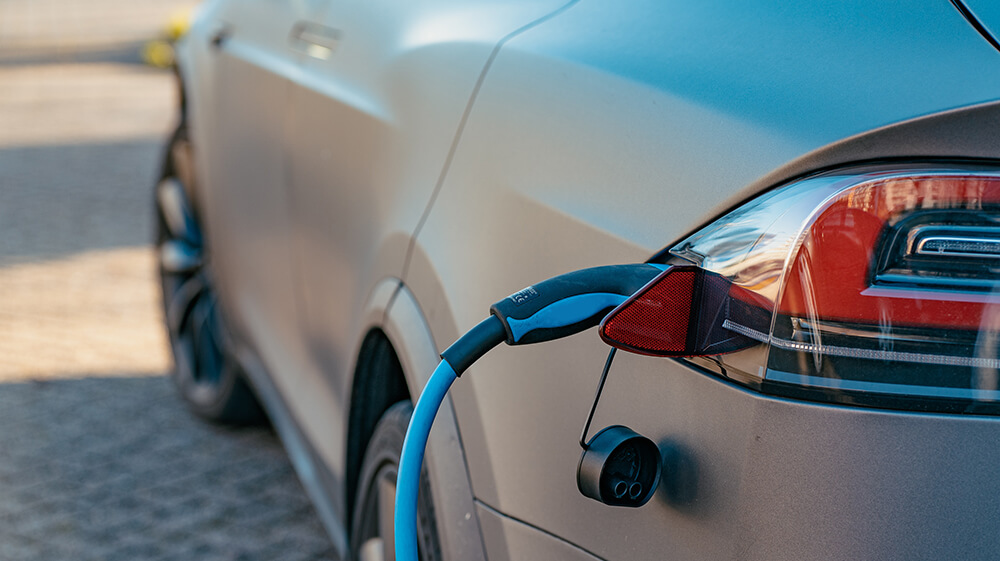
Since the national average lifespan of an internal combustion engine (ICE) is often estimated around 10 years or 200,000 miles, it’s fair for EV buyers to ask the same basic question: how long does an electric car battery last?
And because most of us have watched phone batteries get weird after a few years, it’s also fair that some people are still nervous about EV battery life.
The good news is that an EV battery pack is not a phone battery. It’s larger, more carefully managed, temperature-controlled in most modern EVs, and protected by a battery management system that constantly monitors charging, discharging, temperature, state of charge, and overall pack health.
In today’s blog post, we’ll look at how long EV batteries are expected to last, what real-world data says so far, how battery warranties work, what can shorten battery life, and what used EV shoppers should watch for.
Before we continue: We are not an automaker, battery manufacturer, repair shop, or warranty provider. EV battery life, warranty terms, replacement pricing, degradation estimates, diagnostics, recalls, and repair options can vary by brand, model, model year, battery chemistry, region, software version, title status, service history, and how the vehicle was used. This article is general information only, not repair advice, warranty advice, purchase advice, or a guarantee about any specific EV. Before buying, selling, repairing, or making a warranty decision, check the actual vehicle documents, warranty booklet, recall status, battery health data, and a written estimate from the manufacturer, dealer, or qualified EV repair shop.
EV Battery Lifespan: How Long Should They Last?
Current EV battery technology varies by brand and model, but the broad answer is pretty encouraging: most modern EV batteries should last at least 10-15 years, and many should last 15-20 years or longer if the vehicle is used and maintained reasonably well.
That doesn’t mean every EV battery will be perfect forever. Batteries degrade over time, which means they slowly lose usable capacity. A battery that once delivered 300 miles of real-world range might deliver 270 miles years later. That kind of loss is normal. What would be concerning is sudden range loss, warning messages, charging failures, or a battery that falls below the manufacturer’s warranty capacity threshold.
Most modern EV battery packs use lithium-ion chemistry, though not all lithium-ion packs are the same. You’ll see different chemistries across the market, including nickel-based packs such as NMC/NCM or NCA, and lithium iron phosphate (LFP) packs in some standard-range EVs. LFP packs are generally known for durability and lower cost, while nickel-based packs usually offer higher energy density and longer range.
Battery cycle life also varies by chemistry and design. A rough industry estimate for many lithium-ion EV batteries is 1,500-2,500 full charge cycles, with some LFP packs capable of more. But that number can be misleading because most drivers do not fully charge and fully drain the battery every day. Real-world EV use usually involves partial cycles, and partial cycles are generally easier on the battery than repeated full 0%-100% cycles.
What really matters from a battery lifespan perspective is how well the battery is managed. Modern EV battery management systems monitor pack health and help optimize charging, driving, temperature control, and idle behavior. These systems are far more sophisticated than what you’ll find in a typical phone or laptop battery.
So, while nobody can promise exactly how long any individual EV battery will last, a well-managed modern EV battery should usually outlast the warranty period by a good margin.
What Real-World EV Battery Data Shows So Far
Starting around 2010, the US market began getting enough mass-market EVs on the road to show what happens as these cars age. The results have been mixed in the details, but good overall.
The early Nissan LEAF is probably the best example of why people got nervous about EV battery life in the first place. The original LEAF battery packs did not have active liquid thermal management, and in hot climates some early cars degraded faster than owners expected. That history still follows the LEAF around today, even though newer EVs generally use much more advanced battery management and thermal systems.
At the same time, the old “all EV batteries will be dead in five years” prediction just didn’t happen. Many early LEAFs are still on the road, and many EV batteries have lasted far longer than early critics expected. In some cases, the lack of dead packs has even slowed down the expected supply of used EV batteries for recycling and other second-life projects.
Tesla also gives us a large sample size, especially with Model S, Model X, Model 3, and Model Y. Tesla’s own 2023 Impact Report says Model 3 and Model Y batteries lose about 15% of capacity on average after 200,000 miles. That is not “no degradation,” but it is a long way from the idea that an EV battery is disposable after a few years.
In real-world terms, a Tesla, Rivian, Hyundai, Kia, Ford, Volkswagen, GM, or Nissan battery that retains 70%-85% of its original capacity after high mileage can still be very usable. It may not have the same range it had when new, but that does not automatically mean the battery is failed.
How Long Do EV Batteries Last by Type?
There are always exceptions, but here’s a practical way to think about EV battery lifespan in 2026:
EV / Battery Type |
Expected Battery Life |
What to Watch For |
|---|---|---|
| Modern liquid-cooled EVs | 10-20+ years / 150,000-300,000+ miles | Normal degradation, warranty status, charging history |
| LFP battery EVs | Potentially longer cycle life, often strong durability | Lower cold-weather performance, model-specific range |
| Older air-cooled EVs | More variable, especially in hot climates | Capacity bars, actual range, climate history |
| High-performance EVs | Can still last a long time, but use matters | Hard driving, repeated fast charging, heat, tire/wheel setup |
| EVs with known battery recalls | Depends on recall completion and replacement history | Open recalls, replaced packs, warranty extensions |
The big takeaway is that battery lifespan depends on the pack, the car, and the use case. A newer EV with liquid cooling, good software, reasonable charging habits, and a clean warranty history is a very different situation from an early EV that lived in extreme heat, sat at 100% charge for long periods, or has unresolved recall work.
EV Battery Warranty: How Long Are High Voltage Car Batteries Covered?
In the US, most EV battery warranties are at least 8 years / 100,000 miles. Some brands go longer, and some higher-end or larger-pack EVs have longer mileage coverage.
There are usually two battery warranty concepts to understand:
- Defects or failures: If the high voltage battery or covered EV component fails because of a manufacturing defect during the warranty period, the manufacturer may repair or replace it under warranty.
- Capacity retention: Many EV warranties also include a minimum battery capacity threshold, often around 70%. If the battery drops below that threshold during the warranty period, the manufacturer may repair or replace it according to the warranty terms.
Here’s a broad 2026 warranty reference for several popular EVs. Always check the actual warranty booklet for the specific VIN, model year, trim, battery pack, and region before relying on any warranty claim.
Make |
Model |
Battery / EV Components Warranty |
Capacity Retention |
|---|---|---|---|
| Tesla | Model 3 / Model Y | 8 years / 100,000-120,000 miles, depending on trim | 70% |
| Tesla | Model S / Model X / Cybertruck | 8 years / 150,000 miles | 70% |
| Chevrolet | Bolt EV / Bolt EUV | 8 years / 100,000 miles | Generally 60% on Bolt capacity coverage; check booklet |
| Chevrolet | Equinox EV / Blazer EV / Silverado EV | 8 years / 100,000 miles | Check warranty booklet for exact capacity terms |
| Ford | Mustang Mach-E | 8 years / 100,000 miles | 70% |
| Ford | F-150 Lightning | 8 years / 100,000 miles | 70% |
| Volkswagen | ID.4 | 8 years / 100,000 miles | 70% |
| Hyundai | IONIQ 5 / IONIQ 6 | 10 years / 100,000 miles | 70% |
| Kia | EV6 / EV9 / Niro EV | 10 years / 100,000 miles | 70% |
| Rivian | R1T / R1S | 8 years / 150,000-175,000 miles, depending on pack | 70% |
| Nissan | LEAF | 8 years / 100,000 miles on the lithium-ion battery | Capacity coverage is often based on the LEAF capacity bar display |
One important note for used EV buyers: warranty transfer rules can vary. Most factory EV battery warranties are transferable, but title status, salvage history, commercial use, excluded damage, unauthorized repairs, or improper use can complicate things. Don’t assume. Verify.
How Much Does It Cost to Replace an EV Battery?
We’ve already published a full post about EV battery replacement costs, so we won’t go over every model here.
In general, out-of-warranty EV battery replacement costs can range from roughly $8,000 to $20,000+ for many mainstream EVs, depending on the brand, battery size, pack availability, labor, diagnostics, and whether the issue requires a full pack or a module-level repair.
Some older or smaller EVs may be less expensive, especially if refurbished or third-party options exist. Some large-pack EVs, luxury EVs, trucks, and specialty repairs can cost much more. A full pack replacement on a large electric truck or premium SUV can get very expensive very quickly.
The good news is that full battery replacements are still relatively uncommon compared with the number of EVs on the road. The less-good news is that when an out-of-warranty pack really does need replacement, the bill can be big enough to affect the value of the whole car.
Extending the Lifespan of an Electric Car Battery: Best Practices
You don’t need to baby an EV battery every second of its life, but a few habits can help keep the pack healthier for longer:
- Use Level 2 charging when possible. DC fast charging is fine when you need it, especially on road trips, but daily fast charging can add heat and stress.
- Don’t sit at 100% unless the vehicle or battery chemistry calls for it. Many nickel-based EV batteries are happiest with a daily charge limit around 70%-90%. Some LFP vehicles are designed to be charged to 100% more often for calibration and daily use, so check the owner’s manual.
- Avoid leaving the battery extremely low. Letting an EV sit near 0% for long periods is not good for the high-voltage battery and can create other low-voltage battery issues.
- Watch heat. Hot climates, repeated fast charging, and sitting at a high state of charge in high heat can accelerate degradation.
- Use preconditioning when available. Letting the car prepare the battery before DC fast charging or cold-weather driving can help with performance and charging speed.
- Follow the owner’s manual for long-term storage. Storage advice varies by brand and battery chemistry, so don’t rely on generic internet rules if the car is going to sit.
The simple version: avoid extremes when you can. Don’t keep the battery very full or very empty for long periods, don’t treat DC fast charging like your only charging source unless you have no other choice, and pay attention to warnings from the vehicle.
What Battery Issues Should You Watch Out for on a Used EV?
While most modern EV batteries are holding up well, battery health should still be on your list of concerns when shopping for an older used EV, especially one that is out of warranty.
The first thing to check is whether the EV has any open high-voltage battery recalls or battery-related service campaigns. The Chevy Bolt and Hyundai Kona Electric are good historical examples of EVs where battery recall history matters. Some newer EVs have also had battery, ICCU, contactor, charging, or software-related campaigns that may or may not involve the high-voltage battery itself.
That doesn’t mean someone should avoid every EV that has ever had a recall. It means a person should know whether the recall work was completed, what was replaced, whether the warranty changed, and whether the current owner has documentation.
Another battery issue to look for is significant degradation. Here are a few questions to ask the owner:
- What is the current displayed range at 100%? Displayed range is not a perfect battery health test, but it can reveal obvious issues.
- Has the vehicle ever shown battery, charging, propulsion, or high-voltage warnings? Warning history matters more than a seller saying “it drives fine.”
- Was the EV used in extreme heat or cold? Heat is especially hard on batteries over time.
- How often was DC fast charging used? Road-trip fast charging is normal. Constant fast charging is worth asking about.
- Was the car regularly charged to 100% or left near 0%? This matters more for some battery chemistries than others.
- Is the battery warranty still active, and does it transfer? Check the warranty documents and title history.
- Has the battery pack ever been replaced, repaired, or opened? If yes, get documentation.
If the EV shows heavy degradation, has unresolved warnings, has a salvage title, has an unclear battery history, or is out of warranty with no documentation, be careful. A cheap used EV can become expensive fast if the high-voltage battery is the reason it’s cheap.
Do EV Batteries Need to Be Recycled?
Eventually, yes. EV batteries do not last forever. But in many cases, an EV battery may have a second life before it is recycled. A pack that no longer provides enough range for a vehicle may still have value for stationary storage, research, parts, or remanufacturing.
That said, battery recycling is becoming more important as the EV fleet ages. More EVs on the road today means more packs will eventually come out of service. The recycling industry has been waiting for more volume, and that volume should grow as the first big waves of mass-market EVs continue to age.
So, How Long Does an Electric Car Battery Last?
For most modern EVs, a practical answer is this: expect at least 10-15 years of useful battery life, and don’t be surprised if many EV batteries last 15-20 years or 200,000+ miles with usable range remaining.
Will every EV battery make it that long? No. Defects, recalls, accidents, heat, charging habits, software issues, pack design, and plain bad luck can all matter. But the real-world data so far is a lot better than the old fear that EV batteries would be disposable after a few years.
If you are shopping used, the battery is still one of the most important things to check. Look at warranty status, battery health, recall history, actual range, service records, and seller documentation. For an older EV, especially one out of warranty, a professional inspection or battery health report can be money well spent.
Ready to start your search for a used EV, but not looking forward to clicking through the mess of unnecessary vehicle suggestions and irrelevant options on traditional car listing sites? We built Find My Electric for that reason.
Our used EV listings are easily searched with the most intuitive filters in the business. You can narrow down your ideal EV by battery size, year, make, features, colors, and even Full Self-Driving software.
The best part? No distractions. Unlike other used car websites, we keep your EV search clean of “suggested” gas cars and ads. You’ll only see EVs here, and only the ones you’ve filtered for.
Check out our pre-owned EV listings and if you’re looking to sell your EV, you can build your listing in minutes!