
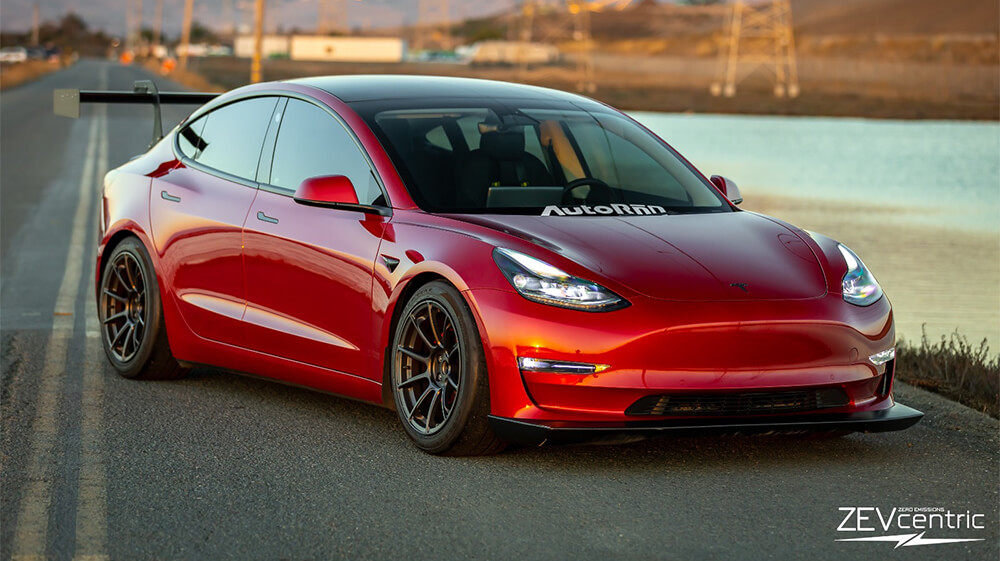
While EVs are not the most modifiable cars on the market, there are still plenty of ways to modify an EV for comfort, performance, protection, or aesthetics.
However, aftermarket modification choices can—and usually do—affect the resale value of your EV.
In this blog post, we’ll look at what defines an aftermarket mod, how mods can affect the value of your EV, and how to sell a modded EV for the best price.
Before we jump in: We are not an automaker, dealer, repair shop, insurer, lender, tax advisor, or warranty provider. This article is general information only, not legal, financial, insurance, warranty, valuation, or repair advice. Aftermarket parts, installation quality, local laws, insurance rules, warranty terms, resale values, and buyer preferences can change. Before modifying, buying, selling, financing, or insuring a modified EV, check your vehicle’s warranty terms, state laws, insurance policy, service records, and any written offer or inspection report tied to your specific vehicle.
What are Aftermarket Mods?
Let’s start by looking at the definition of aftermarket modifications for EVs.
Definition of an Aftermarket Modification (Aftermarket vs OEM)
First, an aftermarket mod is any modification that you make, or pay someone else to make, to the original build of your vehicle after it leaves the factory. Usually, this means parts or materials that are not made by the vehicle’s manufacturer.
This can look like window tint, Paint Protection Film (PPF), a vinyl wrap, changing out upholstery, installing aftermarket wheels, lowering the suspension, adding a body kit, or even swapping tires.
Aftermarket modifications for electric vehicles can also include performance-focused mods like suspension enhancements, wheel sets, brake kits, track-focused cooling improvements, and, in rarer cases, software or controller-related modifications that attempt to change torque delivery, regenerative braking behavior, ride height, or other vehicle systems.
That last category is where things can get risky. On modern EVs, the car is basically a rolling computer connected to a high-voltage drivetrain. Anything that touches wiring, high-voltage components, sensors, software, driver-assistance systems, braking, suspension geometry, or charging hardware should be treated carefully.
Mods vs. Accessories
An accessory, even if it is something you plan on selling along with your car, probably won’t be considered a modification unless it alters the structure, appearance, function, or performance of the car.
For example, storage solutions that are easily moved in and out of the car, like a Tesla frunk organizer or cargo liner, would usually be considered accessories.
However, a new set of aftermarket tires would typically be considered a modification even though they are relatively easily swapped out, because tires affect performance, range, road noise, ride comfort, and safety. And, obviously, you can’t use the car without them.
The same logic applies to things like aftermarket wheels, suspension parts, tint, wraps, paint, audio equipment, and brake upgrades. Some are mild. Some are major. But they all change how a buyer, dealer, appraiser, or manufacturer may look at your EV.
How Can Aftermarket Mods Affect an EV’s Value?
The short answer: modding your EV can increase or reduce your EV’s value, but usually by a much smaller amount than the mod originally cost.
As a rough rule, most mods may add or subtract somewhere around 0%-25% of the modification’s actual cost from the vehicle’s resale value. That does not mean a $5,000 mod makes the car worth $5,000 more. In many cases, it may add nothing. In some cases, it may actually make the car harder to sell.
For the long answer, we’ve broken down mod costs and possible added value into the sections below.
But before we get into the details, we do want to point out that if an aftermarket mod affects your EV’s warranty, serviceability, insurance coverage, safety systems, or buyer pool, the effect on your EV’s used value may be significant.
We highly recommend that you understand the potential change in value before making any aftermarket modification that could affect your EV warranty’s terms and conditions. Anything that includes cutting, wiring, tuning, suspension geometry changes, high-voltage work, structural changes, or driver-assistance sensor changes can create problems later if the vehicle has a failure.
Make sure to read your EV manufacturer’s warranty terms to get a better idea of which aftermarket mods may cause an issue with warranty coverage.
Note: a discussion of warranties and whether aftermarket mods should or shouldn’t affect them is a deeper subject than we are able to address here. To dive into the debate about what a manufacturer should or shouldn’t be able to do regarding your EV’s warranty, you can search for discussions on the Magnuson-Moss Warranty Act.
How Much Are Aftermarket Mods Worth on Used EVs?
Do aftermarket mods add any value to your EV? The short answer: typically not a lot, but it depends.
As a general rule, anything that changes the stock condition of a car tends to reduce its value in the eyes of many buyers.
That doesn’t mean every mod is bad. A professional PPF install, quality ceramic tint, a clean set of popular OEM-style wheels, or a carefully documented suspension upgrade may help with the right buyer. But the key phrase is “the right buyer.”
An exception to the rule would be mods that enhance performance on a car that is already popular for its performance characteristics, provided that you can show the work was done professionally, documented properly, and not abused.
The bottom line is that the perceived value of a modded car will vary widely from buyer to buyer, especially in the private market.
Let’s take a closer look at how manufacturers, dealerships, and private buyers tend to value aftermarket car mods.
Modification Value for Manufacturer Trade-In: Tesla, Rivian, and Other EV Brands
Many EV manufacturers and direct-to-consumer brands now offer trade-in programs that allow you to put your current vehicle’s value toward a new or pre-owned vehicle.
However, the value of a modified EV will often suffer in these transactions.
Tesla currently states that aftermarket vehicle modifications typically have a negative effect on trade-in valuations, and that trade-in vehicles are best kept in stock or original condition. In plain English: if you are trading a Tesla back to Tesla, do not expect Tesla to give you extra money for your wrap, wheels, tint, suspension, or other aftermarket work.
Rivian is less specific publicly, but trade-in programs generally follow the same basic logic. Your trade-in value is based on the vehicle’s year, mileage, condition, title, options, market demand, and whether the vehicle can be resold cleanly. A modified EV may still be accepted, but unusual mods can make the car harder to value and harder to resell.
The same is generally true with traditional automakers and dealership trade-ins. A stock, clean, well-documented EV is usually easier to appraise than one with custom work.
How Much are EV Mods Worth at a Dealership?
Like trading in to a manufacturer, most modified electric vehicles will take a hit in value at a dealership versus a similar stock-condition car. The best dealership offers tend to be for clean-title, stock-condition cars with low mileage, no weird history, and obvious buyer appeal.
However, some EV modifications may be value neutral or somewhat positive to the right dealership. For example, a dealership that focuses on EVs might consider it a bonus for a Tesla Model 3 to already have PPF on the rockers, which are a known problem area, especially if the work was done professionally and recently.
Likewise, a clean ceramic tint job in a hot-weather market may not hurt value. A quality set of tires with plenty of life remaining may help. A popular OEM-style wheel upgrade may be fine. But aggressive suspension, loud visual wraps, unusual interiors, unknown wiring, aftermarket driver-assistance hardware, or non-reversible body changes can make dealers nervous.
Even from a knowledgeable dealership, you may only get a small percentage of your original investment back for the mod, even if you paid quite a bit to purchase it and/or have it installed.
How Much Are EV Mods Worth in a Private Sale?
How much you can get for EV mods in a private sale varies widely by the type of mod and the kind of buyer you end up attracting.
This is where mods have the best chance of adding value, because private buyers are more emotional and more specific. A buyer looking for a tastefully modified Model 3 Performance may pay more for the right suspension, wheels, and PPF than a dealer would. A buyer looking for a stock commuter EV may not care at all.
Let’s look at common EV mods and how they may affect the selling price of your EV.
Paint Protection Film (PPF)
A full, professional installation of paint protection film (PPF) on an EV can cost anywhere from $2,000-$9,000, though many full-body quotes still land around $4,000-$7,000 depending on the shop, film, vehicle size, and coverage.
For a smaller install of PPF, such as on the rockers, front bumper, mirrors, hood, or other high-impact areas, prices often hover around $500-$2,000.
DIY PPF, while not recommended for large or visible areas, costs only as much as the actual film and tools. This could be as little as $200 for smaller installs all the way up to $2,000 or more for the entire car.
Possible return on investment: + 10% to + 20% of the PPF install
For the right buyer, PPF can be a real bonus, especially if the film was applied recently, professionally, and over a factory paint color that buyers actually want. If a full PPF install on your EV cost around $5,000, then the added value to your used price might be around $500-$1,000.
Not all buyers will be interested in PPF as an added feature, especially those just looking for a commuter or family EV that fits their budget. Your EV may take longer to sell if you insist on making back a large percentage of your investment in PPF.
Also, condition matters. Yellowing film, peeling edges, trapped dirt, knife marks, or a poorly installed wrap can hurt value rather than help it.
EV Brake Upgrades
Aftermarket brake upgrades for EVs can cost anywhere from $500-$1,500 for basic brake system components all the way up to $10,000-$25,000+ for serious track-focused or carbon-ceramic brake packages.
Possible return on investment: + 5% to + 15% of the parts and installation cost
While upgraded brakes aren’t a significant factor for most EV buyers, there is a possibility that you could get some return from buyers who care about performance driving or track use. Even so, brakes are wear-and-tear items, and many buyers will wonder how hard the car was driven if it has a big brake kit.
For example, an $8,000 brake upgrade may only add around $400-$1,200 to your vehicle’s value, and only if the buyer actually wants it.
For most EV sellers, brake upgrades are better treated as something you enjoyed while owning the car, not something you should expect to recover when selling.
Electric Vehicle Suspension Mods
Suspension mods are among the most widely available performance mods for electric vehicles. They can cost anywhere from $300-$800 for components like sway bars and spring sets to $2,000-$5,000+ for full suspension coil-over kits or more advanced setups.
Possible return on investment: + 5% to + 10% OR – 10% to – 25% of the parts and installation cost
People have strong opinions about how a suspension should feel. What may feel firm and sporty to you could feel harsh and annoying to someone else.
For buyers who like the feel of the aftermarket suspension in your EV, you might make back a small amount of your purchase price, especially if the installation was done professionally and the alignment was documented. For a $3,000 job, that might mean $150-$300 added to the price of your EV.
However, be prepared to see the value go down in the eyes of buyers looking for the stock suspension. For a $3,000 mod, that could mean a possible loss of $300-$750 from your selling price.
Also, modified suspension can raise questions about tire wear, ride comfort, alignment, warranty, and whether the car was driven hard. If you have the stock suspension parts, including them with the sale can help.
Cost of Aftermarket Wheels and Tires for EVs
Tires are a special item for EVs, with most costing from $150-$600 each. On average, a good EV tire from a respected brand is going to cost about $250-$400, or about $1,000-$1,600 for a full set.
Aftermarket wheels for EVs can easily cost $1,500-$8,000+ for a set, with many common wheel upgrades landing around $2,000-$4,000.
Possible return on investment: + 10% to + 20% of the wheel and/or tire replacement
We’d say it’s best to stick with a well-known name brand set of tires for EVs, particularly if you want them to add some value in a sale.
For a good set of tires, you can expect up to 10% of the price added to your EV’s value, particularly if they are still in excellent condition. Selling a set of winter tires along with your vehicle may net you up to 20% of your original cost, especially in cold-weather markets.
Aftermarket wheel sets for your EV can increase value in a similar way to tires, but there are exceptions. If the wheel set is wildly original, extremely oversized, cheap, damaged, inefficient, or just doesn’t match the stock design well, then you may end up detracting from the value of your EV.
Wheel weight matters more on EVs than many buyers realize. A heavier or less aerodynamic wheel can reduce range. If the wheels look good but hurt efficiency, some buyers will see that as a negative.
If you still have the stock wheels, include them with the sale or mention that they are available separately. That gives buyers options and reduces the “I need to undo this” factor.
EV Reupholstery Pricing
Most EVs are new enough that the upholstery should still be in decent condition, so an upholstery mod is usually aesthetic in nature. Switching seat materials or changing the interior color can cost around $300-$1,000 per seat depending on materials and complexity.
Reupholstering in genuine leather or doing a full custom interior can bring the price to somewhere around $5,000-$12,000+ depending on the size of the car and the type of materials you choose.
Possible return on investment: – 20% to + 5% of the reupholstering cost
Like so many other mods, an upholstery upgrade or modification is a very personal choice and doesn’t necessarily appeal to buyers in a way that adds value. Stock upholstery is best in most cases.
While it can cost a great deal to have upholstery work done, the best return you’ll likely get is around 5% of the modification’s price. But even that number is optimistic. Your upholstery choices may also drop the value of your vehicle by as much as 20% of the reupholstering price if the color, material, stitching, or quality does not appeal to buyers.
EV Window Tinting Prices
Window tinting is a popular way to improve comfort, reduce heat, and give an EV a cleaner look. It typically costs anywhere from $300 for a few windows to $1,500-$2,000 for high-quality ceramic film on most or all windows.
Possible return on investment: + 0% to + 20% of the tint installation
Unless the tint on your EV was done poorly, is bubbling, is scratched, or is extremely dark, window tinting can either be value neutral or slightly positive. Most people don’t mind a little window tinting, especially if it was done professionally.
For a well-done tinting job, you might be able to add up to 20% of the mod’s price to the sales value of your EV. That’s about $300-$400 for a high-quality tinting job that cost around $1,500-$2,000.
Just be careful with legality. Tint laws vary by state, and illegal tint can become a hassle for the next buyer.
EV Spoiler and Body Kit Price Range
Depending on the extent of the exterior changes you are making to your EV, body modifications can cost anywhere from $500-$15,000+.
Possible return on investment: – 20% to + 10% of the parts and installation cost
Like any other aesthetic choice on a vehicle, spoilers and body kits will only hold value to you and to similarly minded buyers. You may be able to get up to 10% back on a body kit purchase, maybe $500 for a $5,000 purchase, but this will largely depend on the kind of buyer you are attracting.
Body kits may help you improve the efficiency of your EV in very specific cases, but let’s be honest: most of them are installed to achieve a certain aesthetic. For instance, most of the Mustang Mach-E body mods we’ve seen—spoilers, fender flares, diffusers—give the Mach-E a more aggressive visual stance, but they don’t realistically improve your track performance or your range in a meaningful way.
A word of caution if you’re on the fence about getting EV body mods: many people may assume that if your EV looks like a racecar, it has probably been driven like a racecar. That perception can negatively impact your selling price rather than boost it.
EV Custom Paint Jobs
A custom paint job on an EV typically costs between $2,000-$6,000 for quality work on a single color, but can run up into the tens of thousands if you’re looking for something truly unique, artistic, or show-quality.
Possible return on investment: – 25% to + 3% of the paint job’s cost
A custom paint job, whether it was done for aesthetics or just to replace old paint, doesn’t typically add much value to your EV. In many cases, a custom color can hurt your EV’s value by up to 25% of the paint job’s original cost.
There are exceptions. A high-quality repaint in a factory-like color on a car that had bad paint may be value neutral. But a loud custom color, poor paintwork, overspray, missing documentation, or unclear accident history can make buyers suspicious.
Note: If you haven’t already changed the color of your EV, be sure to look into body wraps first to see if they will meet your needs for a custom color. Wraps are typically removable and come in a wide variety of colors, patterns, and textures. Just remember that a wrap can also hide paint condition, so buyers may ask questions.
EV Audio Upgrades
Aftermarket audio equipment has a wide price range, with components starting at less than $100 up to systems that can cost nearly as much as an older used EV. The average cost of a good EV aftermarket sound system runs around $1,000-$4,000.
Possible return on investment: – 10% to + 10% of the upgrade’s cost
Let’s be honest: the audio equipment in many modern EVs is more than adequate for most people’s needs. Only buyers who are also dedicated audiophiles will be interested in paying extra for your choice of a sound system upgrade, and only if it matches their own preferences.
Audio mods can also raise questions if they involve wiring, added amplifiers, trunk space loss, rattles, or electrical issues. You may be waiting a while to sell your EV if you want to get real value for your audio mods.
That said, there are some EVs where an audio upgrade may be more appreciated than usual. For example, the “$59k” base AWD Cybertruck—a temporary February 2026 price reduction on the $69k vehicle, which people now casually refer to that way—has a stripped-down audio system as one of its cost-saving measures. It’s been noted in a few YouTube videos and owner discussions that it lacks the punch of the Premium AWD trim, mainly because it does not have a subwoofer. If the upgrade is clean, tasteful, and well-documented, this is one of the few cases where the right buyer may actually care.
EV Software, Performance, and Electrical Mods
This category deserves its own mention in 2026.
EVs are software-heavy vehicles. That makes software features valuable, but it also means questionable software or electrical mods can scare buyers away.
Factory software features, like Tesla Acceleration Boost or legitimate factory-enabled performance packages, may add some value if they stay with the vehicle. But unofficial software changes, wiring hacks, CAN bus devices, non-factory driver-assistance modifications, high-voltage charging changes, or anything that interferes with vehicle systems can be a major problem for resale.
Possible return on investment: – 25% to + 10%, depending heavily on what was changed
If the mod is factory-supported, documented, transferable, and easy to verify, it may help. If it is unofficial, undocumented, irreversible, or connected to safety systems, it may hurt value significantly.
This is one area where we would be very careful. A buyer can forgive a tint color they don’t love. They may not forgive electrical gremlins caused by unknown wiring.
Which EV Mods Usually Hold Value Best?
If you’re thinking about resale before modifying your EV, the safest mods are usually the ones that are clean, useful, reversible, legal, and professionally installed.
In general, the better resale-friendly EV mods include:
- Professional PPF on high-impact areas or full body
- Quality ceramic window tint within legal limits
- Good EV-rated tires with plenty of tread life
- OEM or OEM-style wheels in desirable sizes
- Factory-supported software upgrades that stay with the car
- Removable accessories, cargo mats, liners, organizers, and charging accessories
The riskiest mods are usually the ones that are personal, aggressive, hard to reverse, poorly documented, or connected to safety/performance systems.
That includes things like:
- Extreme suspension changes
- Cheap or very heavy aftermarket wheels
- Unusual paint colors or low-quality wraps
- Body kits that require cutting or drilling
- Electrical wiring hacks
- Unofficial software or performance tuning
- Anything that interferes with sensors, cameras, radar, airbags, braking, steering, charging, or high-voltage systems
The Best Way to Sell an EV with Aftermarket Mods
While trading in your modified EV may streamline the process of getting a new car, it’s may not get as much value as selling a modded EV privately.
One of the easiest ways to sell a modified EV for a decent price is to a dealership with real EV experience. But how will you know which dealerships even understand how to value a Rivian R1S with aftermarket wheels, a Tesla Model 3 Performance with PPF and suspension mods, or a Ford F-150 Lightning with upgraded tires?
That’s where an EV-informed offer matters.
Our EV Cash Offer program can help connect you with EV-informed dealers who understand EV-specific features, options, software, battery health, and modifications better than a generic used car buyer might.
But there is one more way to sell your modded electric car: list your EV on Find My Electric and get potential exposure to EV-focused buyers who are already looking for used EVs.
Our listings system is entirely EV-focused. Whether it’s a Tesla Model Y with a full body wrap, a Rivian R1T with tasteful wheels and tires, or a Kia EV6 with professional tint and PPF, your EV won’t be out of place here.
If you’re selling privately, documentation matters. Include receipts, installer names, warranty info, before-and-after photos, stock parts if you still have them, and a clear description of what was changed. Don’t make buyers guess.
And if you’re handling a private-party sale, payment and title transfer matter too. For safer private-party payment and title transfer, we recommend using KeySavvy.
Don’t assume every buyer will value your EV mods the same way you do. But with the right listing, the right documentation, and the right audience, a tastefully modified EV can still find the right buyer.