
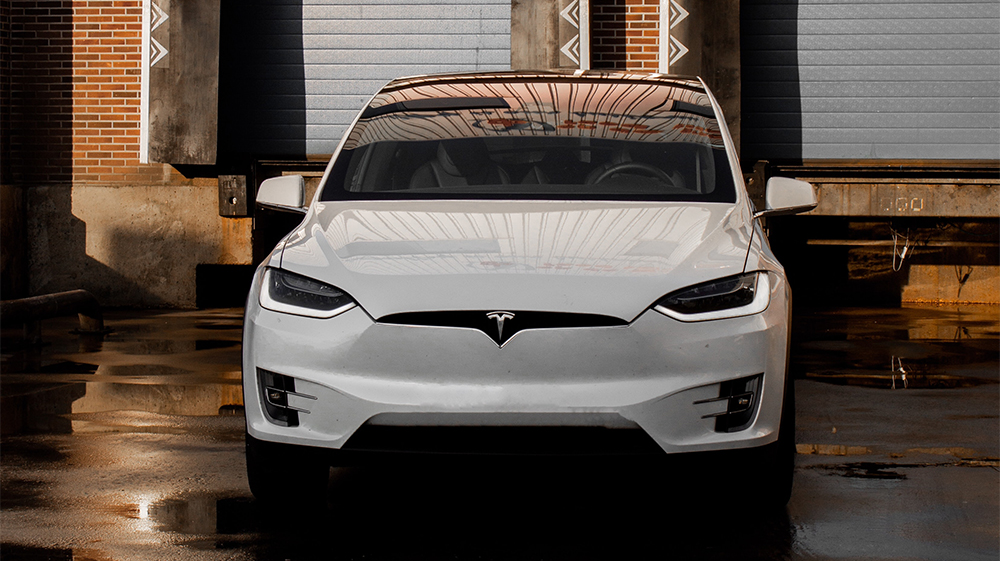
Sounding like something out of a sci-fi movie, Tesla’s Bioweapon Defense Mode is a feature that first appeared on Model X, later became available on Model S, and has since made its way into more of Tesla’s lineup.
Bioweapon Defense Mode is an option that’s definitely generated some publicity for Tesla, because it’s not every day you see automakers offering features that are useful in apocalyptic scenarios (hey there stainless steel Cybertruck 😉).
So, with that said—this post is part of our ongoing “Tesla Features Explained” series where we dive into a specific Tesla feature and break it down on an oh-so-nerdy level. Sound good? Alright, let’s jump in!
Quick note before we get too far into it: Bioweapon Defense Mode is a very impressive air-filtration feature, but it is not a guarantee of protection from every pollutant, virus, wildfire event, chemical exposure, or actual doomsday scenario. Think of it as a serious cabin-air filtration system with a ridiculous Tesla name, not a substitute for real safety guidance.
Bioweapon Defense Mode: How It Works & Why It Matters
Hospitals, clean rooms, and other facilities where air cleanliness is important all typically have one thing in common—the use of HEPA filters to scrub the air, and this is the same general technology that Tesla uses for vehicles equipped with Bioweapon Defense Mode.
HEPA is an acronym that stands for high-efficiency particulate air. This is a considerably higher-performing filter than what’s used in many normal automotive systems. Tesla says its HEPA system removes at least 99.97% of fine particulate matter and gaseous pollutants, along with bacteria, viruses, pollen, and mold spores. In plain English, these are serious filters when it comes to cleaning cabin air.
And it’s these exceptional filters that are so crucial to protecting the comfort and health of Tesla drivers and passengers. People often think about exhaust fumes, dust, and wildfire smoke only when they can see or smell them, but air quality can affect daily driving comfort in a major way—especially if you deal with allergies, asthma, smoke season, heavy traffic pollution, or construction dust.
So, how does the system work? It’s actually pretty simple. In vehicles equipped with Tesla’s HEPA filtration system, the large HEPA filter helps clean incoming cabin air whenever climate control is on and outside air is being pulled into the vehicle. When Bioweapon Defense Mode is activated, the system ramps up the fans and creates positive pressure inside the cabin, which helps minimize the amount of outside air that can leak in through gaps around doors, seals, and vents.
In addition to the HEPA filter itself, Tesla’s system also uses gas media / activated carbon-style filtration to help reduce odors and certain gaseous pollutants. That’s why owners often notice the feature most during wildfire smoke, dusty road conditions, traffic fumes, or that one unforgettable moment when you are stuck behind a diesel truck that is apparently trying to terraform the highway.
In order to switch on Bioweapon Defense Mode, open the climate control screen and tap the biohazard symbol. On equipped vehicles, the fan speed will jump noticeably, and the system will begin pressurizing the cabin through the filtration system.
OK Cool, But Does Bioweapon Defense Mode Actually Work?
This is the question that everyone asks—does it actually work? Sure, it sounds cool, but does it really work or is it just a gimmick?
Because Tesla is famous for bringing sci-fi-like features to real life, it’s no surprise that yes—Bioweapon Defense Mode actually does work as a cabin-air filtration system, and Tesla has tested the heck out of it. One of the more famous tests involved Tesla putting a Model X inside a bubble contaminated with extreme levels of pollution so they could determine just how effective it was.
During that test, Tesla said the Model X cleaned the cabin air to undetectable pollutant levels and also reduced the contaminant level in the bubble outside the vehicle. So yes—not only does the system work inside the cabin, but under that test setup, it also helped clean some of the surrounding air as well, which is quite the feat for an automotive filtration system.
That said, this is where a little common sense matters. Bioweapon Defense Mode is great for particulate-heavy situations like smoke, dust, pollen, and pollution, but it should not be treated like a personal medical device or a guaranteed shield against every airborne risk. Filtration effectiveness depends on particle size, exposure type, filter condition, cabin sealing, fan operation, and how the system is being used.
For wildfire smoke, bad air-quality days, heavy pollen, or dusty traffic, though, this feature can be legitimately useful. Tesla owners continue to use it in real-world smoke and air-quality situations, and the old owner examples are still relevant:
The Reddit embed above is an older archived post, but the use case still holds up: wildfire smoke is one of the most practical reasons to care about Bioweapon Defense Mode.
Which Tesla Vehicles Have Bioweapon Defense Mode? Does The Model 3 Have It?
This is the part of the article that needed the biggest update since the older version was written.
Originally, Bioweapon Defense Mode was mostly a Model S and Model X story. That made sense at the time because the HEPA filter hardware was huge, and Tesla said the system was too large to fit into the Model 3.
Model S & X also have an acid gas filter, an alkaline gas filter & a carbon monoxide detector that autoswitches car to recirc mode. We should prob tell people about this more. Filters are giant, so too big to fit in Model 3.
— Elon Musk (@elonmusk) June 1, 2018
Today, the picture is different. Bioweapon Defense Mode / HEPA filtration is generally associated with Model S, Model X, Model Y, and Cybertruck, depending on model year, market, build, and equipment. Tesla’s current owner manuals for Model S, Model Y, and Cybertruck all describe the HEPA filter and Bioweapon Defense Mode behavior, including the positive-pressure cabin function.
Model 3 is still the major exception. Model 3 has cabin filtration, of course, but it has not historically had the giant HEPA setup and dedicated Bioweapon Defense Mode in the same way as Tesla’s larger vehicles. If you’re buying used and this feature matters to you, do not assume every Tesla has it just because the listing says “premium interior,” “great air filter,” or “new cabin filters.” Look for the biohazard icon in the climate screen and verify the actual equipment on the car.
What About Model Y and Cybertruck?
The Model Y is the big update compared to the original 2021 version of this article. Tesla later added HEPA filtration and Bioweapon Defense Mode to Model Y, and Tesla has also sold an official HEPA Air Filtration Upgrade for certain 2020-2024 Model Y vehicles. Tesla’s shop listing for that upgrade says the package includes Bioweapon Defense Mode firmware as part of the HEPA system.
Cybertruck also has HEPA filtration and Bioweapon Defense Mode language in Tesla’s owner documentation. That makes sense, because if any Tesla should have an apocalyptic button in the HVAC menu, it’s probably the stainless-steel triangle truck.
The most important used-buyer takeaway is simple: verify the exact vehicle. Tesla feature availability changes by model, build date, market, and retrofit eligibility, so the touchscreen is your friend here. If the car has Bioweapon Defense Mode, you should see the biohazard icon in the climate control screen.
Are There Any Aftermarket Options?
For most owners, this is not something we’d treat like a normal aftermarket mod. Bioweapon Defense Mode is not just “stick a better cabin filter in there and call it a day.” The full feature depends on the correct HEPA filter hardware, ducting/filtration setup, firmware support, and climate system behavior.
That said, Tesla has offered official retrofit/upgrade paths for certain vehicles. Older Model S and Model X vehicles had an official HEPA Air Filtration Upgrade available in the Tesla shop, and Tesla has also offered a Model Y HEPA Air Filtration Upgrade for certain 2020-2024 Model Y vehicles. Availability can change, so check Tesla’s shop/app/service options for the specific VIN instead of assuming an old link still applies.
If you’re looking at a used Model S, Model X, Model Y, or Cybertruck and Bioweapon Defense Mode matters to you, the cleanest approach is to buy a vehicle that already has it equipped and working. Retrofitting may be possible in some cases, but it is not something we’d count on blindly.
Tesla Bioweapon Defense Mode—Final Thoughts
Not only is this a cool feature, but it’s also quite practical, especially in uncertain times when you never quite know what types of pollutants might be in the air around your vehicle. Wildfire smoke, pollen, dust, traffic pollution, bad smells, and poor AQI days are all very real-world reasons to care about cabin filtration.
The biggest change since this article was first written is that Bioweapon Defense Mode is no longer just a Model S/X talking point. Model Y and Cybertruck have entered the conversation, while Model 3 remains the main Tesla where you should not expect the same HEPA/Bioweapon setup.
With that said, if you’re looking to snag an amazing deal on a used Tesla Model S, Model X, or another Tesla with Bioweapon Defense Mode, be sure to check out our used Tesla listings to find the exact Tesla you want!
We’ve also built an insanely good search function into Find My Electric, and listed Bioweapon Defense Mode as a configurable option on listings where applicable, so it’s easy to search for Teslas that have it—so don’t forget to check that out and find the used Tesla you’ve been dreaming of!