
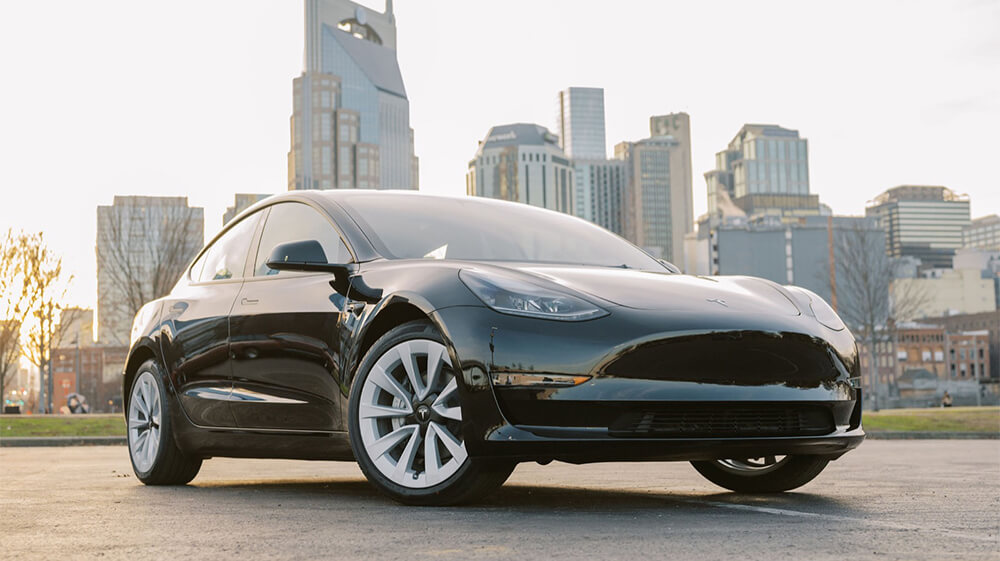
EVs have been on the market long enough to give us some great data and consumer experiences that we can use to rate EV brands and how well they’ve held up over time. We’ve seen the industry go through everything from early battery concerns to real-world proof that many EV batteries can last well beyond 100,000 miles.
These observations are what make us confident that EVs are vehicles you can definitely buy used—both on a budget and with reliable results.
One quick note before diving in: We are not an automaker, dealer, tax advisor, mechanic, or lender, and used EV prices, incentives, warranty terms, battery health, recall status, and market conditions can change quickly. This article is general information only, not a guaranteed valuation, buying recommendation, inspection report, or tax/financial advice. Before buying or selling a used EV, check the vehicle’s actual title status, warranty coverage, battery health, recall history, charging equipment, service records, and current market value.
Top Used EVs in 2026
Let’s take a look at some of the best used electric cars on the market in 2026, some potential things to check for when you’re considering a used EV, and where to find used electric vehicles on the Internet.
The used EV market has changed a lot since 2024. The federal used EV tax credit is no longer available for vehicles acquired after September 30, 2025, new EV prices have moved around, Tesla has changed its lineup, and used EV inventory is much broader than it used to be. That’s good news for buyers, because there are now more real used EV choices than just “cheap LEAF” or “used Tesla.”
1) Tesla Model 3
Make/Model |
Range (mi) |
New/Late-Model Price |
Typical Used Price |
|---|---|---|---|
| Tesla Model 3 | 220-363 | About $35,000-$55,000 | $14,000-$40,000+ |
One of the most popular and visible EVs on the road today, the Model 3 still makes number one on our list of best used EVs for the money thanks to its wide availability, competitive used pricing, strong range, Supercharger access, and proven battery performance.
Used Model 3 pricing has changed dramatically over the last few years. What used to be a car that sometimes sold near or above MSRP during the 2021-2022 market craziness is now one of the most common used EV bargains in the country. You can find older used Model 3s in the mid-teens to low-$20k range, while newer Long Range, Performance, and refreshed “Highland” cars can still command much more.
Range on the Model 3 is still in the upper tier for the money, especially if you’re shopping Long Range trims. Older Standard Range cars are still plenty useful for daily driving, while Long Range and Performance versions offer more road-trip flexibility.
Battery longevity is also one of the Model 3’s biggest advantages. Tesla’s recent data shows Model 3 and Model Y vehicles losing about 15% of battery capacity on average after 200,000 miles, which is very usable for most buyers. That doesn’t mean every individual car will be perfect, but it does mean the Model 3 has enough real-world battery data behind it that buyers don’t need to treat it like an unknown experiment.
Warranty coverage is another plus, depending on year and mileage. The earliest Model 3s are now out of basic warranty and some are outside the battery warranty by age or mileage, but many 2020+ cars may still have some Battery and Drive Unit Warranty remaining. For more detail, see our Ultimate Guide to Tesla Warranty Coverage.
What about quality? Early Model 3s had some paint, trim, and panel-gap issues, and we still recommend checking rockers, lower doors, bumpers, glass, suspension noises, and interior wear. But as a used EV value, it’s hard to beat a Model 3 that has good service history, a clean title, healthy battery data, and the right price.
2) Nissan LEAF
Make/Model |
Range (mi) |
New/Late-Model Price |
Typical Used Price |
|---|---|---|---|
| Nissan LEAF (2011-2017) | 73-107 | Originally about $30,000-$37,000 | $4,000-$10,000 |
| Nissan LEAF (2018-2025) | 149-212 | About $28,000-$38,000 | $8,000-$22,000 |
| Nissan LEAF (2026 redesign) | Up to about 300+ | About low-$30k to low-$40k | Too new for normal used pricing |
Next up is the Nissan LEAF, which would probably have our top spot if price were the only factor. The Nissan LEAF is still one of the cheapest used EVs you can buy, and for the right buyer, it can be a fantastic commuter car.
The key phrase there is “for the right buyer.” Older LEAFs have limited range, use CHAdeMO fast charging, and do not have the same battery thermal management as many newer EVs. That means climate, battery condition, and actual remaining range matter more on a used LEAF than they do on some other EVs.
If you’re shopping a 2011-2017 LEAF, think of it as a local commuter or second car. These can be extremely cheap, but many have small batteries and degraded range. That doesn’t make them bad—it just means you need to buy one for the job it can actually do.
The 2018-2025 LEAF is much more useful, especially the PLUS models with larger packs. These offer better range, better usability, and still very reasonable prices. For a buyer who has home charging, short daily drives, and no need for frequent DC fast charging, a used LEAF can still be one of the best EVs for the money.
The 2026 LEAF is a different story. Nissan redesigned the LEAF into a much more modern EV with much more range and better battery technology, but that car is too new to be a normal used-car bargain yet. For this article, the used LEAF value play is still mostly about the 2018-2025 cars, with older LEAFs being useful only for very budget-focused local driving.
If you’re considering one, check the battery health bars, actual displayed range, charging history, climate history, and whether the car’s range still fits your daily life. For more info, check out our article on Nissan LEAF battery replacement.
3) Tesla Model Y
Make/Model |
Range (mi) |
New/Late-Model Price |
Typical Used Price |
|---|---|---|---|
| Tesla Model Y | 244-330+ | About $40,000-$60,000+ | $23,000-$50,000+ |
The Model Y has become one of the most common EVs on the road, and that is starting to show up in the used market in a big way. A few years ago, used Model Ys were still expensive enough that the Model 3 was the obvious value pick. In 2026, the gap has narrowed.
A used Model Y is one of the best used EVs for buyers who want Tesla range, charging access, cargo space, and crossover practicality. It’s not usually as cheap as a Model 3, but it gives you a hatchback-style cargo area, higher seating position, available third row on some versions, and a more family-friendly layout.
Model Y pricing varies a lot by year, trim, mileage, and whether you’re looking at an older Long Range/Performance model or a newer refreshed version. Used values have also been affected by Tesla’s new-car pricing changes, which can move the whole used Tesla market around quickly.
As with the Model 3, battery health has generally been strong, but you still want to check warranty status, title history, tire condition, suspension noises, accident repairs, Autopilot/FSD status, and whether any software features are actually included with the car.
The Model Y probably isn’t the cheapest used EV for the money. But for many buyers, it may be the best all-around used EV for the money.
4) Tesla Model S
Make/Model |
Range (mi) |
New/Late-Model Price |
Typical Used Price |
|---|---|---|---|
| Tesla Model S | About 208-405 | Discontinued; late-model cars were roughly $75,000-$100,000+ | $18,000-$70,000+ |
The Tesla Model S is not the cheapest used EV, and it’s not the simplest used EV, but a used Model S can still be one of the best used electric cars for the money if you want range, performance, comfort, and a more premium Tesla experience without paying new luxury-EV pricing. Not to mention the fact that the Model S is now discontinued, so used is pretty much the only way to get one.
The used Model S market is wide. Older 2014-2018 cars can be surprisingly cheap now, especially higher-mileage examples. Newer 2019-2021 cars bring better range and more updated hardware, while 2021+ refreshed Model S and Plaid cars are still more expensive but can represent a lot of performance for the money.
Yes, older Model S ownership comes with known issues. Door handles, MCU screens, suspension components, control arms, sunroof issues, charging hardware, and other age-related repairs can matter. Some early cars are also out of battery and drive-unit warranty, and buyers should take that seriously.
But the flip side is that these cars are common, well understood, and supported by a large Tesla owner/repair ecosystem. Many late-model used Model S vehicles can still have Battery and Drive Unit Warranty coverage remaining, and most of the common issues are no longer mysterious. You’re not buying an unknown science project—you’re buying a known used luxury EV with known strengths and known weaknesses.
The Model S also still has advantages that many newer EVs don’t match at the same used price: long range, huge hatchback cargo space, fast acceleration, Supercharger access, available Free Supercharging on some older cars, and a genuinely premium feel when you find a clean one.
For buyers who want the lowest-cost EV commuter, a Model S probably isn’t the answer. But for buyers who want a used electric luxury sedan with real performance and range, it absolutely belongs on this list.
5) Hyundai Kona Electric
Make/Model |
Range (mi) |
New/Late-Model Price |
Typical Used Price |
|---|---|---|---|
| Hyundai Kona Electric | About 200-261 | About $33,000-$43,000 | $12,000-$30,000 |
We’d put the Hyundai Kona Electric in the same general “smart used commuter” bracket as the Nissan LEAF, but with one big advantage over older LEAFs: range.
The first-generation Kona Electric offered an EPA range around 258 miles, which is still very useful today. It’s small, efficient, easy to drive, and generally a strong value if you don’t need a large back seat or a huge cargo area.
The main thing to watch is battery recall history. Some early Kona Electric models were affected by battery recall issues, so it’s wise to verify recall completion and warranty status before buying. It’s also wise to confirm how much of the original Hyundai EV warranty transfers to a second owner, since warranty transfer rules can matter a lot on used EVs.
The redesigned Kona Electric is more modern and roomier, but newer examples will naturally cost more. If you’re looking strictly for the best used EV for the money, the sweet spot is usually a clean first-generation Kona Electric with good service records, completed recall work, and a price that makes sense next to a Model 3.
6) Kia Niro EV
Make/Model |
Range (mi) |
New/Late-Model Price |
Typical Used Price |
|---|---|---|---|
| Kia Niro EV | 239-253 | About $40,000-$45,000 | $13,000-$30,000 |
The Kia Niro EV doesn’t always get the attention it deserves, and that’s part of why it can be a good used EV buy.
It’s not flashy, it’s not especially fast, and it doesn’t have Tesla’s charging network advantage. But it does offer useful range, a practical hatchback/crossover shape, good efficiency, and a more normal-car feel that some buyers actually prefer.
Used Niro EVs can be especially appealing if you want something newer and more comfortable than an older LEAF, but don’t want to pay Model Y money. Like the Kona Electric, the Niro EV is at its best as a daily driver and commuter, not necessarily as a cross-country fast-charging machine.
When shopping, compare the Niro EV directly against the Kona Electric and VW ID.4. If the Niro is priced right and the battery warranty/service history checks out, it can be one of the better under-the-radar used EVs for the money.
7) Volkswagen ID.4
Make/Model |
Range (mi) |
New/Late-Model Price |
Typical Used Price |
|---|---|---|---|
| Volkswagen ID.4 | 209-291 | About $40,000-$55,000 | $18,000-$35,000 |
The Volkswagen ID.4 has moved into an interesting spot in the used EV market. It’s not as exciting as a Tesla and not as cheap as other vehicles, but it can be a very comfortable, practical used electric crossover for the money.
The ID.4 has a roomy cabin, quiet ride, useful cargo space, and enough range for most buyers. Used prices have also come down enough that it deserves a real look, especially for buyers who want a more traditional crossover feel.
The biggest knocks are software quirks, charging/network considerations, and the fact that not every VW dealer has the same EV service experience. Before buying one, check recall history, software update status, charging performance, and whether your local VW dealer is comfortable servicing ID.4s.
If those boxes check out, a used ID.4 can be a good value alternative to a Model Y, especially if comfort and price matter more than acceleration or charging-network simplicity.
Honorable Mentions
A few used EVs didn’t make the main list, but still deserve attention.
Chevrolet Bolt EV / Bolt EUV: The Bolt is still one of the cheapest and most practical used EVs in America, and it can be a great buy for commuting and local driving. We moved it to honorable mention because the battery recall history is too important to gloss over in a clean “best for the money” ranking. Some Bolts received replacement battery packs, some received diagnostic software and a monitoring period, and some may still need recall-related work verified. If you’re considering one, check the VIN, recall status, battery warranty, charging history, and whether the software monitoring period has been completed.
Ford Mustang Mach-E: Worth cross-shopping against the Model Y and ID.4. Used prices have become much more attractive, and the Mach-E offers good range, good looks, and a more familiar interior. Service, warranty, and charging setup are the main things to verify.
Hyundai IONIQ 5 and Kia EV6: These are excellent EVs and are becoming more interesting used buys. They charge quickly, look modern, and have strong range. They may still cost more than the true bargain picks, but they’re worth watching as used prices fall.
BMW i3: Weird, fun, efficient, and sometimes very cheap. But it’s a niche pick now. Range is limited, tires are unusual, and it’s not the best fit for everyone.
What to Look For in a Used Electric Car
You may already know to check for balding tires, upholstery smells, clean titles, accident history, and service records when shopping for a used car. However, there are a few EV-specific items to check while you’re considering a used EV for purchase.
First, check the battery warranty and actual battery health. EV batteries are proving to be very reliable, but the most expensive repair on an EV is still usually a high-voltage battery replacement. In the US, EV battery warranties are commonly 8 years/100,000 miles or more, but the exact coverage varies by brand, trim, original sale date, mileage, and whether the warranty fully transfers.
Next, check recall history. This matters on every used car, but it matters even more on EVs because some recalls involve high-voltage battery packs, charging hardware, software limits, or safety systems. The Chevy Bolt and Hyundai Kona Electric are the obvious examples, but they are not the only EVs with important recall history. You can see recall information for any EV by entering its VIN on the NHTSA website.
Pay attention to charging equipment and charging standard. Older LEAFs use CHAdeMO. Many non-Tesla EVs use CCS. Newer EVs are moving toward NACS/Tesla-style charging access. That does not mean an older CCS or CHAdeMO EV is automatically a bad buy, but it does mean you should understand how and where you’ll charge it before buying.
Check the touchscreen and software systems. Most EVs rely heavily on screens, apps, driver-assistance software, and over-the-air updates. Make sure the touchscreen works, the app connects properly, the car accepts updates, and advertised features are actually active.
Look at tires and suspension carefully. EVs are heavy, quick, and can eat tires faster than some gas cars. Uneven tire wear can also point to alignment or suspension issues.
Verify service support in your area. A used EV bargain is less attractive if the nearest qualified service center is three hours away. Before buying a less common EV, call local dealerships or EV repair shops and ask whether they actually service that model.
Finally, understand the current tax-credit situation. The federal used clean vehicle credit is no longer available for vehicles acquired after September 30, 2025. State, utility, and local incentives may still exist, but the old federal used EV credit should not be treated as part of the 2026 buying math.
Where to Find The Best Used EVs (Hint: You’re Already Here)
The used electric vehicle market has exploded over the last several years, and now you really can find a used EV just about anywhere.
However, since many traditional dealerships and used car websites still think in terms of gas-engine vehicles, you’re going to find out quickly that not everyone knows the difference between an EV and a plug-in hybrid.
Or a Hyundai Kona from a Hyundai Kona Electric.
Or between Enhanced Autopilot (EAP) and Full Self-Driving (FSD).
We’ve saved you the trouble of wading through irrelevant listings by creating one of the most advanced used electric car marketplaces on the web. On Find My Electric, you’ll be able to filter and sort through the models and features you are actually interested in without distracting suggestions for gas cars with similar names or cargo capacity.
From the best used commuter cars like the Nissan LEAF to used Tesla values like the Model 3 and Model S, plus practical electric crossovers like the Model Y, ID.4, Kona Electric, and Niro EV, we’ve got the options that help you narrow down your search for the best used electric car to suit your needs.
And if you’re buying or selling privately, payment and title handling matter. For safer private-party payment and title transfer, we recommend using KeySavvy. The federal used EV tax credit is no longer part of the equation, but a safer transaction process is still worth caring about.
Ready to start your search? Check out our listings for used EVs from Tesla, Hyundai, Nissan, Kia, Volkswagen, and more to find the best used EV for your budget today.