
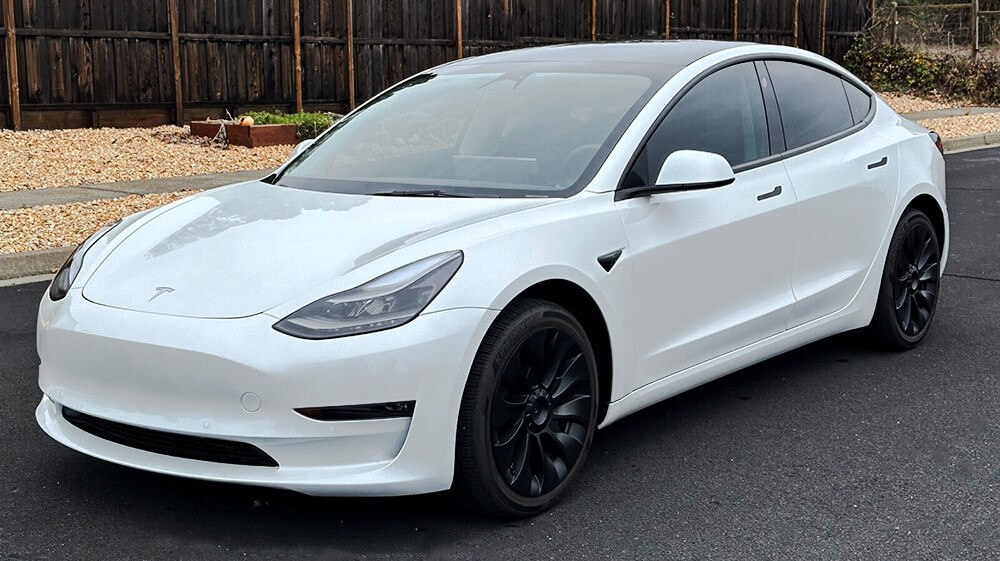
With the buzz about the Federal Clean Vehicle Credit requirements making even hesitant potential electric vehicle buyers take a second look, this year’s market for EVs surging forward. But price can you expect for a new EV this year? What is the average price for new electric vehicles on the US market, and what can we expect for EV prices in the future?
Let’s take a dive into what it costs to buy a new EV in 2024:
Average Price for New EVs in the US
Before we get to an average price for electric vehicles in the US, let’s talk about the outer edges of the price spectrum for new EVs:
At the bottom end of the spectrum, the 2024 Nissan LEAF S is the cheapest electric car in the US with a starting MSRP of $28,140. The LEAF may qualify for the partial Clean Vehicle Credit, potentially dropping its effective price down by another $3,750. Coming in second for cheapest EV is the 2024 Mini Cooper SE, which has an MSRP of $30,900.
The most expensive EV in the US right now is the 2023 Rolls-Royce Spectre, with an asking price of a whopping $422,750 for its base trim. Of course, you probably won’t find a tax break to bring the price down on this luxury 2-door coupe.
While no reasonable, mainstream EV even approaches the price point of the Spectre, electric vehicle prices do tend to average about 5.5% higher than the average non-electric vehicle. This is a significant drop over the past three years percentage-wise, but it hasn’t made as much of a dent in the actual purchasing cost of an electric vehicle as we’d like to see. The reality is that all vehicle prices have gone up over the past few years.
Now let’s take a closer look at the average prices of new EVs by comparing the top ten best-selling EVs in the US:
Average Price of the Top Ten Best-Selling EVs
You’ll get a few different answers for the top 10 list of electric cars in the US for 2024; some focus on the price, units sold, how quickly they sold, number of reservations, perceived popularity, etc. The following list contains the Top Ten best-selling electric vehicles that we’ve ranked by the total number of sales made in 2023 (with pricing current as of 1/15/2024):
Rank |
Make & Model |
Price Range |
US Units Sold |
|---|---|---|---|
| 1 | Tesla Model Y | $43,990 – $52,490 | 394,497 |
| 2 | Tesla Model 3 | $38,990 – $45,990 | 220,910 |
| 3 | Chevrolet Bolt EV | $26,599 – $29,700 | 62,450 |
| 4 | Ford Mustang Mach-E | $43,495 – $65,000 | 40,771 |
| 5 | VW ID.4 | $38,995 – $55,245 | 37,789 |
| 6 | Hyundai IONIQ 5 | $41,650 – $53,350 | 33,918 |
| 7 | Rivian R1S | $78,000 – $99,000 | 24,783 |
| 8 | Ford F-150 Lightning | $49,995 – $91,995 | 24,165 |
| 9 | Tesla Model X | $79,990 – $94,990 | 23,015 |
| 10 | Kia EV6 | $42,600 – $61,600 | 18,879 |
The average price of the top ten electric vehicles in the US is about $53,758, with an average of $48,430 for the low end trim of each model and $64,936 for the high end trim of each model. For these ten EVs, prices range from $26,599 at the low end (the Chevrolet Bolt EV) and go all the way up to $99,000 for the most expensive trim of the Rivian R1S.
Obviously, these ten models aren’t the only EVs being sold in the US. So, what is the average price for electric vehicles across the entire US market? Currently, most estimates put the average price of a new EV somewhere around $50,798, which is about $2,500-$3,000 lower than the average price in the spring and summer of last year (2023). For comparison, the average price in 2024 of a new car of any kind in the US is around $48,800.
However, this EV average price doesn’t differentiate between cars, SUVs, and trucks, so we’d like to break it down a little further:
The average price of electric cars (sedans, small hatchbacks, sport models, etc.) in the US is closer to $72,000. This includes cars like the Tesla Model 3, Lucid Air, Chevrolet Bolt EV, and the Nissan Leaf. While the price seems high, the luxury sedans and luxury sports cars outnumber the economy cars in this category, increasing the average price quite a bit. Still, we’d like to point out that the electric car category also includes the cheapest EV available, the Chevrolet Bolt EV (followed closely by the Nissan Leaf).
Note: we left the Lucid Air Sapphire and the Rolls-Royce Spectre entirely out of these calculations, because the unusual quarter and half million price points on these limited, super luxury EVs would increase the average significantly.
For all-electric SUVs, the average price comes to about $45,612. Surprisingly, many electric SUVs are quickly entering the market at or even below the average price of electric vehicles of any category. While the least expensive electric SUV, the Chevrolet Bolt EUV, actually comes in at less than $30,000, most electric SUVs on the market cost between $35,000-$45,000.
The average price of an electric truck is around $75,882, though there are only about five electric pickup trucks on the market at the time of writing (soon to be seven with the GMC Sierra EV Denali and the RAM 1500 REV). We’ve seen a $64,526 average MSRP for the base models of these electric trucks and an average of $103,294 for the fully-optioned models.
Average Price for Used EVs in the US
In early 2024, the average price for used EVs is between $30,000 and $35,000.
A growing percentage of EVs can be found at prices below $25,000. The cheapest used EVs tend to be either a Nissan Leaf, Kia Soul EV, or Chevrolet Spark, but the Model 3 and the older Tesla Model S can show up in the $20,000-$25,000 price range.
Let’s take another look at our top ten list of best-selling EVs, this time with their current average used price:
Rank |
Make & Model |
Used Price Range |
|---|---|---|
| 1 | Tesla Model Y | $32,000 – $75,000 |
| 2 | Tesla Model 3 | $30,000 – $55,000 |
| 3 | Chevrolet Bolt EV | $15,000 – $28,000 |
| 4 | Ford Mustang Mach-E | $40,000 – $70,000 |
| 5 | VW ID.4 | $35,000 – $45,000 |
| 6 | Hyundai IONIQ 5 | $28,000 – $55,000 |
| 7 | Rivian R1S | $85,000 – $103,000 |
| 8 | Ford F-150 Lightning | $58,000 – $115,000 |
| 9 | Tesla Model X | $35,000 – $135,000 |
| 10 | Kia EV6 | $38,000 – $58,000 |
For the top ten best-selling EVs, used prices average around $56,750. The average price of the least expensive used EVs of each model reduces to about $39,600. For the highest asking prices, that average goes up to $62,400.
Most of the electric cars on our list can be found for less than the average price of a new car in the US. With the exception of the Rivian R1S and the Ford F-150 Lightning, many trims of the top ten best sellers are listed with used prices below $48,000.
The price of used electric cars in the US is still high, though they are much more affordable now than at the beginning of 2023. In the next two sections, we’ll look at why these prices are still high and how those prices are dropping.
Why Are EVs Still So Expensive?
Updated 1/16/2024
The price of battery packs should have been the key to the reduction in EV prices, and before 2020, it looked like we might reach the ideal battery price of less than $100 per kilowatt hour (kWh). However, today’s battery prices are hovering around $133-$139 per kWh.
The last several years have caused a series of unfortunate manufacturing events. With disrupted supply chains, shipping nightmares, factory shutdowns, material scarcity, and increased competition for components, the entire car industry (not just EV manufacturers) has faced a difficult road to recovery. Most have resorted to counteracting the rising cost of materials with a rising cost to consumers.
Even on the private market, used EV prices remained at or near MSRP until early 2023 thanks to long lead times for production of new vehicles and scarcity of affordable EVs. However, prices have dropped due to Tesla’s price drops and the EV industry response to the Federal Clean Vehicle Credit (and Used Clean Vehicle Credit).
The sellers market for EVs may have ended in 2023, and the cost of an electric cars is still in flux. Let’s talk about why EV car prices are on their way down:
When Will Electric Vehicle Costs Go Down?
Updated 1/16/2024
In response to new Federal law that changed which vehicles were eligible for the Federal Clean Vehicle Credit, Tesla dramatically reduced their prices. In order to stay competitive with Tesla, other manufacturers have followed suit. Additionally, dealership markups that have kept some EV prices sky-high have settled down. And with the reduction in new EV prices and the introduction of the used EV tax credit, sellers of used electric vehicles have reduced expectations and asking prices as well. For the first time ever, we are seeing Model 3 Long Range AWD variants with asking prices below the $25k mark.
Could new battery technology be on the horizon for EVs? Possibly; a change in battery components could bring the industry to a more stable supply situation. However, lithium is still the preferred battery type for most EVs. With this limiting factor in mind, we may see an increase in EVs with a smaller range and hopefully a smaller price tag than the current market.
As part of this potential new wave of smaller, more affordable EVs, will Tesla bring out its long-awaited Model 2 (originally called the $25,000 Tesla)? We hope so, though at this point any information about the Model 2 is still mostly a rumor.
Where Do You Find a Good Deal on an EV?
If both new and used EV prices are falling, where can you go to find a good deal on an electric vehicle?
EVs made by Tesla and Chevrolet are in the running for budget options eligible for the Federal EV credit. That potential extra $3,750-$7,500 tax break helps bring the average cost of a new EV down quite a bit.
But there’s still another way to get the best deal on an electric car right now. 2023 really was the start of a buyer’s market for used EVs!
We’ve made it easy to compare pre-owned EVs from most manufacturers of electric cars, SUVs, and trucks right here in our listings section.
You can search and sort by whatever metric means the most to you, whether that’s price, range, body style, color, or even AP hardware (Tesla fans, we’ve got you covered). The best part? Not having to share that listing space with ICE cars or frustrating ads.
Don’t wait for the best EV deals to pass you by; be sure to check out our EV listings today!