
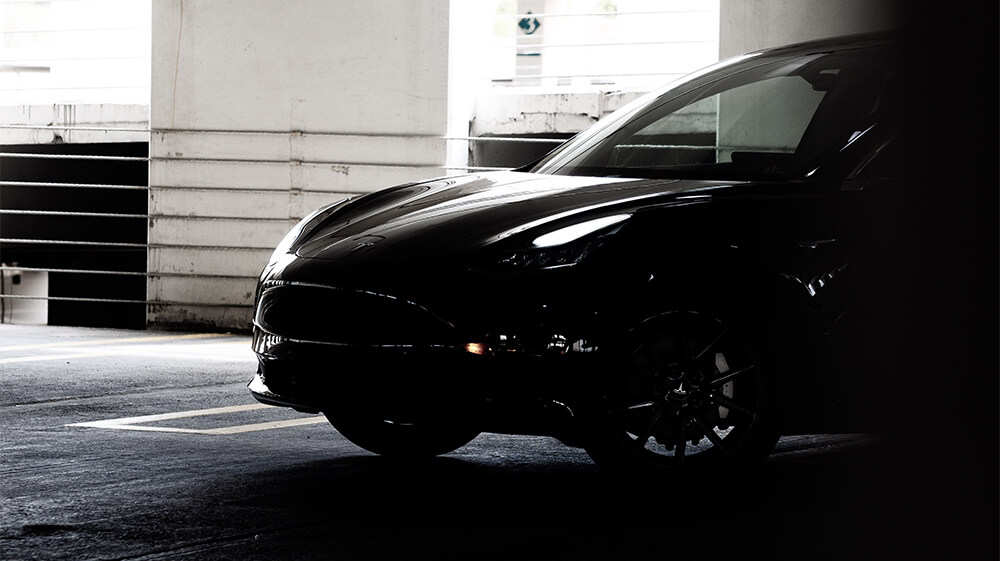
Ever since Tesla mentioned the potential for a budget EV in their lineup during Battery Day in 2020, fans and hopefuls have been waiting for news about the production of what is commonly known as the Tesla Model 2. But is there any such car in the works? Can we expect a Tesla Model 2 in 2026? What are the Tesla Model 2’s specs? When will the Tesla Model 2 be released?
Mid-2026 update: Tesla still has not announced an official “Model 2,” and the long-rumored $25,000 Tesla has not materialized as a standalone vehicle. Instead, Tesla’s more affordable push has so far shown up as lower-priced Standard versions of the Model 3 and Model Y, not an all-new entry-level Tesla. Tesla’s current US configurator lists the Model 3 starting at $38,630 and the Model Y starting at $41,630, including destination and order fees but before taxes and other fees.
In this blog post, we’ll start by covering all we know about the Model 2 and its production. Later, we’ll discuss whether or not waiting for the Tesla Model 2 is worth your time, and what other budget-friendly Tesla options are out there right now.
What We Know About the Tesla Model 2
First, let’s talk about the project’s name. Tesla has never publicly named their $25,000 car project. However, thanks to their tongue-in-cheek vehicle naming scheme “S3XY,” many enthusiasts and most in the media began calling the project the Model 2, for a possible naming scheme of “2S3XY CARS.”
Elon himself doesn’t refer to the project as Model 2. As he stated in Tesla’s 2021 Annual Shareholders Q&A: “Yes, Model 2 is not a car. There is no Model 2. The 3 means E (in Model 3). We were going to call it the Model E, but then Ford tried to sue us. And so we said, let’s call it the Model 3.”
In other words, the potential $25,000 Tesla EV (or the budget Tesla model) would not be called “Model 2” if/when it comes out. We still don’t know if the project has a definitive name within Tesla itself, but we do know that Tesla would rather avoid being sued by Ford over something as simple as a name. Like Model E, Model 2 is also a name Ford has used in the past.
It’s worth noting that some commentators refer to the $25,000 Tesla as the Tesla Model Q thanks to a rendering by Instagram’s CarForce247 (not an official Tesla design). Still others refer to the $25,000 Tesla as the “Baby Tesla” based on the assumption that it will be the smallest Tesla offered.
While we recognize that Tesla doesn’t have a name for this project, we’ll be referring to the $25,000 Tesla car as the Model 2 through the rest of this article to stay consistent with common media use.
Regardless of its name, the Model 2 Tesla seemed stalled from 2021 to 2022. In the same 2021 Q4 Q&A as we’ve already referenced, Elon stated: “Well, we’re not currently working on a $25,000 car. At some point, we will, but we have enough on our plate right now, too much on our plate, frankly.”
By 2025, Tesla’s “more affordable model” plans appeared to shift away from a totally new Model 2-style vehicle. Tesla said in its Q2 2025 update that it had completed first builds of a more affordable model in June, with volume production planned for the second half of 2025. Later that year, Tesla released the Model 3 Standard and Model Y Standard, which were lower-priced versions of existing models rather than an all-new $25,000 EV.
Has the situation changed in 2026? Not really. Tesla’s Q1 2026 update referenced the continued global rollout of Model 3 and Model Y trims, including more affordable trims of both models, but it did not announce a new Model 2 or a $25,000 standalone Tesla. Tesla also said it expects volume production of both Cybercab and the Tesla Semi this year, which suggests the company’s next major new vehicle programs are still focused elsewhere.
So, could Tesla still release a smaller, cheaper vehicle someday? Sure. But as of mid-2026, there is no official Model 2, no confirmed $25,000 Tesla release date, and no reason to assume a brand-new budget Tesla is right around the corner.
The $25,000 Tesla: Tesla Model 2 Price, Specs, and Battery Range
First, how much is a Tesla Model 2? Well, it’s still commonly referred to as the $25,000 car, giving us the obvious starting number for this Model 2 price discussion. However, that number looks less realistic in 2026 than it did when Tesla first floated the idea years ago.
Recent inflation, higher vehicle transaction prices, the end of the federal EV tax credit, and Tesla’s own product choices all point in the same direction: if Tesla does eventually release a true entry-level car, it probably won’t be a clean $25,000 vehicle in the US market. The federal new and used clean vehicle credits ended for vehicles acquired after September 30, 2025, which also changes the real-world affordability math for buyers.
For the Model 2, Tesla’s price is likely to land closer to the low-to-mid $30,000s—or higher—if it ever makes it to production as a normal consumer vehicle. For now, Tesla’s actual budget-friendly new-car options are the Model 3 Standard and Model Y Standard.
One other factor that may influence the final cost of any future budget Tesla is whether or not Tesla manages to implement larger-scale production efficiencies for a new platform, reducing the number of parts needed and reducing production time. There have been plenty of rumors around casting, batteries, and lower-cost production methods, but none of that has translated into a confirmed Model 2 launch yet.
Next, let’s run through some possible Tesla Model 2 specifications: body type, features, and battery range.
With a budget pricing scheme and the body style of Tesla’s competition in the budget EV arena, the Model 2 would likely be smaller than the Model 3 or Model Y. Possible body styles are a small hatchback, compact sedan, or small crossover with scaled-back interior features and options in comparison to the Model 3 / Model Y. As a budget Tesla hatchback or compact EV, the Model 2 would compete with lower-cost EVs globally, including vehicles like the Renault 4 E-Tech, VW ID.2, and other small EVs that are more common outside the US
The already minimalist construction of Tesla’s interiors would likely be even more stark in the Model 2, with fewer luxury-feel extras such as heated rear seats, premium audio, rear screens, or upgraded interior materials. Tesla’s Standard trims already show how the company approaches lower-cost versions: fewer features, simpler equipment, and less differentiation from the outside than many buyers expected.
Some speculation links the Model 2 concept to Tesla’s Robotaxi/Cybercab platform, but at this point those should be treated as separate ideas. Cybercab is designed around autonomy, while the rumored Model 2 has usually been discussed as a lower-cost consumer car. Tesla may share technology or manufacturing ideas between programs, but that does not mean a steering-wheel-free Robotaxi and a budget Model 2 are the same product.
With regards to features, a future Tesla Model 2 would likely come equipped with Tesla’s current driver-assistance hardware, with Full Self-Driving available as a paid option or subscription. That said, Tesla has already shown with the Standard Model 3/Y trims that some driver-assistance and comfort features may be reduced or packaged differently on lower-priced models.
The Tesla Model 2 range is often expected to be around 250 to 300 miles, but that still remains as speculation. If Tesla ever builds a true entry-level vehicle, battery size and chemistry will probably depend heavily on cost. LFP batteries would make sense for an affordable Tesla, but Tesla has not confirmed a Model 2 battery pack, supplier, chemistry, or EPA range.
Some rumors out of China have claimed that a future budget Tesla could use BYD Blade batteries or other lower-cost battery technology. That remains unconfirmed. At this point, the safest assumption is that Tesla would aim for enough range to be competitive, not class-leading. A base Model 2 around 250 miles of range would make sense, while higher-range or performance versions would depend on whether Tesla wants the car to be a true budget model or another upsell ladder.
At a budget-friendly price, we should assume that Tesla would build the Model 2 with all things in moderation. And while Tesla does sporty well with all of their cars, the Model 2’s 0-60 acceleration would likely be slower than other models, probably closer to 5-7 seconds. It would still have that instant Tesla torque, but less of a thrill ride feel and probably fewer premium suspension and interior features.
With specification speculation out of the way, let’s take a look at some possible timelines for the Model 2:
Model 2 Release Date: Possible Model 2 Production Timeline
With Cybercab, Semi, Robotaxi-related work, Optimus, and continued Model 3/Y updates taking priority, Tesla’s production roadmap is already crowded in 2026. Tesla has said it expects volume production of Cybercab and Semi this year, but it has not announced a Model 2 production timeline.
As of mid-2026, we don’t see any reason to expect a standalone Tesla Model 2 release this year. If Tesla does revive a true $25,000-ish consumer EV project, we would expect to see clearer product announcements, prototypes, regulatory filings, or factory-specific production signals before taking a launch seriously.
The more realistic near-term answer is that Tesla’s “budget” strategy continues through cheaper trims of existing vehicles, not a brand-new Model 2.
Should You Wait for the Tesla Model 2?
If you’ve read this far, by now you probably know that we wouldn’t recommend waiting for the Model 2 release this year. In all likelihood, Tesla will keep any true Model 2-style vehicle out of mass production until at least 2027, if it happens at all.
But if you are a few years out from making your purchase, keep checking the news. A lower-priced Tesla aimed at the mass market is still possible, especially as Tesla works to reduce production costs, expand lower-cost trims, and compete with cheaper EVs globally.
Right now, if you are in the market for a new budget-friendly Tesla or other EV, the Model 2 is not your best bet. Tesla’s current new-car budget options are the Model 3 Standard and Model Y Standard, but even those remain well above the long-rumored $25,000 price point.
That’s where we come in. The market for used EVs is still solid in the post-tax-credit world, and we often have pre-owned Model 3s in the $15,000-$25,000 range on our listings page (use the filters to search for your max price and sort by lowest price). And you can often find an older Model S for even less, though it’s definitely a good idea to do some research on the early Model S before buying. Be sure to check out our Ultimate Buyers Guide for more details on what to look for in a used Tesla.
And hey, if you aren’t set on buying a budget Tesla, be sure to check through our other EV brand listings to see if you can score a deal that fits your lifestyle and finances today!